A Website Is Not a Sales System (Here’s What Outdoor Businesses Are Missing)

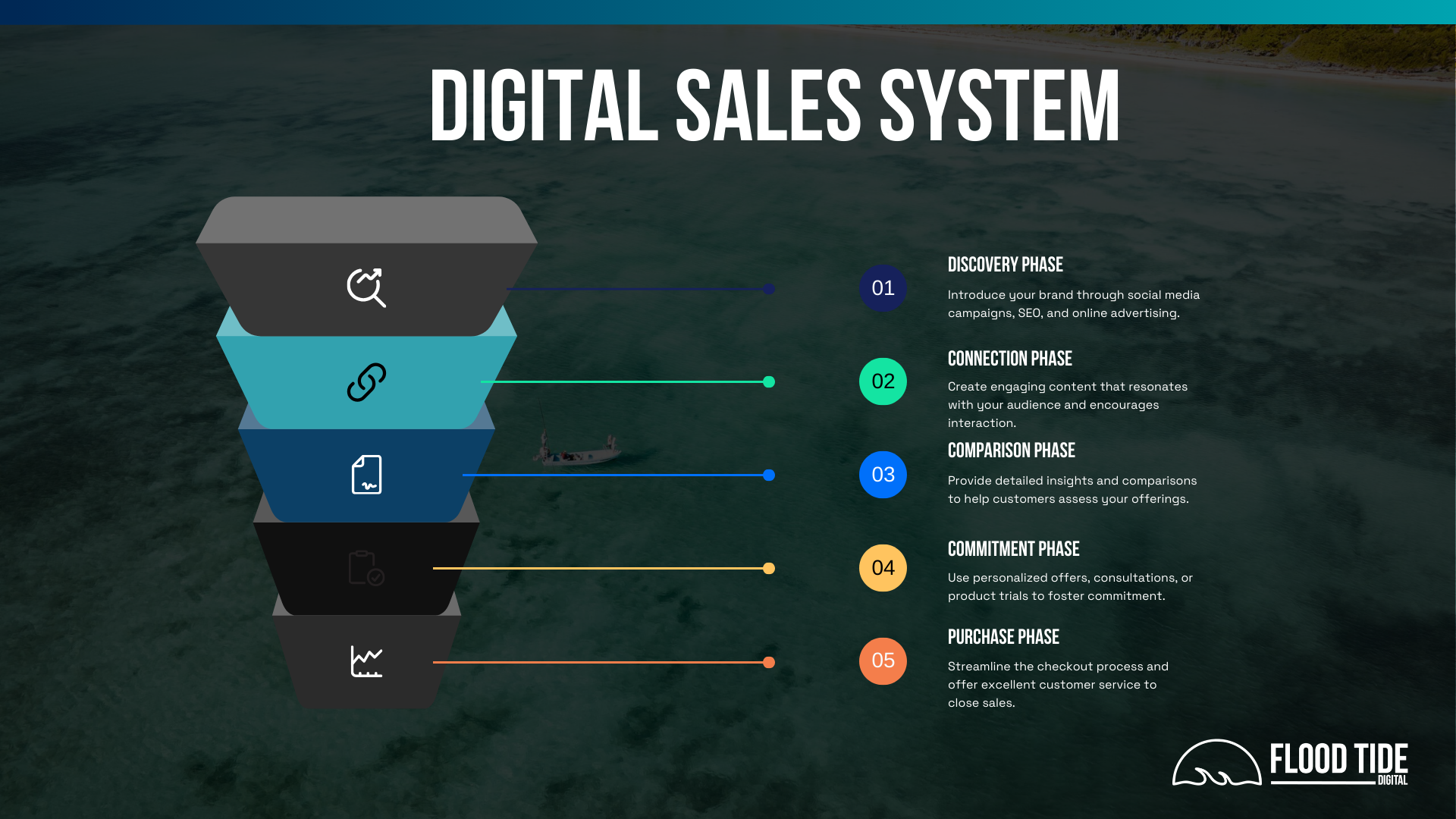
A Website Is Not a Sales System
Here’s What Outdoor Businesses Are Missing
Most outdoor businesses don’t think they have a website problem.
They think they have a traffic problem.
The assumption is simple:
If we can just get more people to our site, the bookings will follow.
So owners chase:
- higher Google rankings
- paid ads
- more social content
But for many outfitters, lodges, campgrounds, and experience-based businesses, that approach doesn’t work.
Not because demand isn’t there — but because the website was never built to convert interest into action.
Most Outdoor Websites Were Never Built to Sell
Most outdoor websites function like digital brochures.
They look okay.
They showcase the experience the best they can.
They explain what the business offers.
But they don’t actively guide a potential customer toward a decision.
That creates a quiet but expensive problem: interest shows up, but bookings don’t.
This happens when:
- pages prioritize aesthetics over vital decision-making infomation
- calls to action are unclear or not present
- booking paths are fragmented or confusing
- inquiries aren’t captured or followed up consistently
The website exists — but it doesn’t really work.
Why a Good-Looking Website Can Still Fails to Produce Bookings
A website is only one piece of how someone decides to book an experience.
A sales system is the full infrastructure that supports and leads someone to making that decision.
This distinction is critical.
A website is the star players and should answer all the questions but a sales system guides the users' behavior from begining to end.
Most websites focus on:
- design
- branding
- content
- navigation
Those things obviously matter, but on their own, they don’t produce consistent bookings. This is what I call the "Field of Dreams" attitude. If you know the movie, you know the "build it, and they will come" phrase. This is unfortuntely, how so many outdoor experience business owners treat their digital presence.
But a sales system goes further. A lot further. It connects the dots between interest, confidence, and action.
A proper sales system includes:
- inbound demand foundations through social, search and paid traffic
- a website structured, designed, and built to lead users from interest to action
- booking and inquiry flows matched to buyer intent
- customer communication sequences and follow-up
- tracking tied to real actions, not vanity metrics
When these elements work together, your digital presence becomes a business asset instead of a pain in the a$$.
The simplest way to think about the difference between a regular website and a curated digital sales system:
A website exists to tell people what you offer.
A sales system leads them from interest to action.
Outdoor businesses sell high-consideration experiences.
People don’t make those decisions casually.
They need clarity.
They need confidence.
They need an obvious next step.
A website alone doesn’t provide that.
A system does.
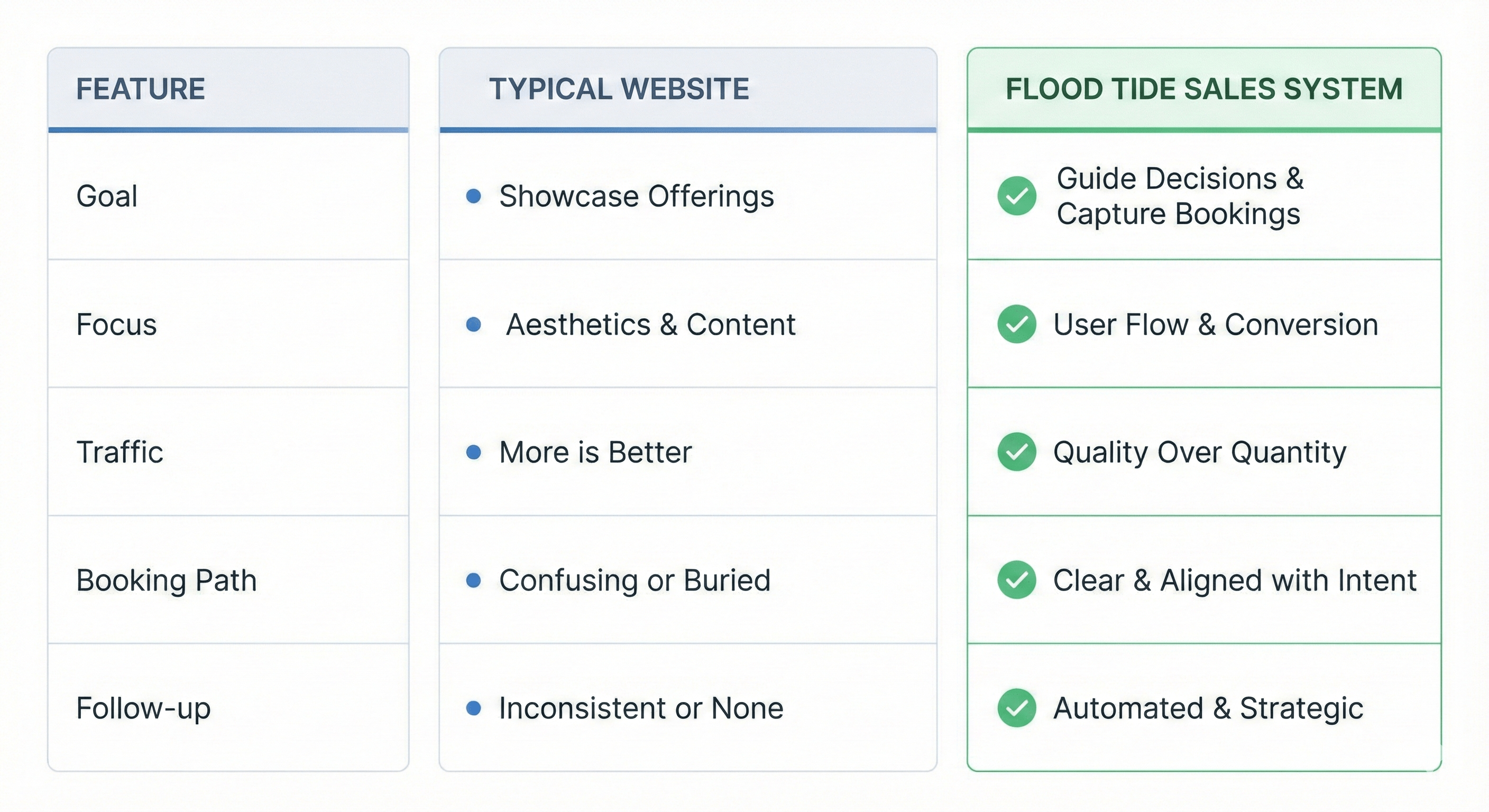
What a Sales System Looks Like for High-Value Outdoor Experiences
High-value outdoor experiences don’t sell the way products do.
People aren’t clicking “add to cart” on a whim. They’re making considered decisions that involve timing, trust, logistics, and confidence.
A good sales system accounts for that.
At its core, a sales system is built around how people actually decide to book, not how a business wishes they would.
That means starting with a few critical questions:
- What experiences matter most to revenue?
- What questions do buyers need answered before committing?
- What signals indicate serious intent?
- What happens after someone raises their hand?
When those questions are answered correctly, the system does the heavy lifting.
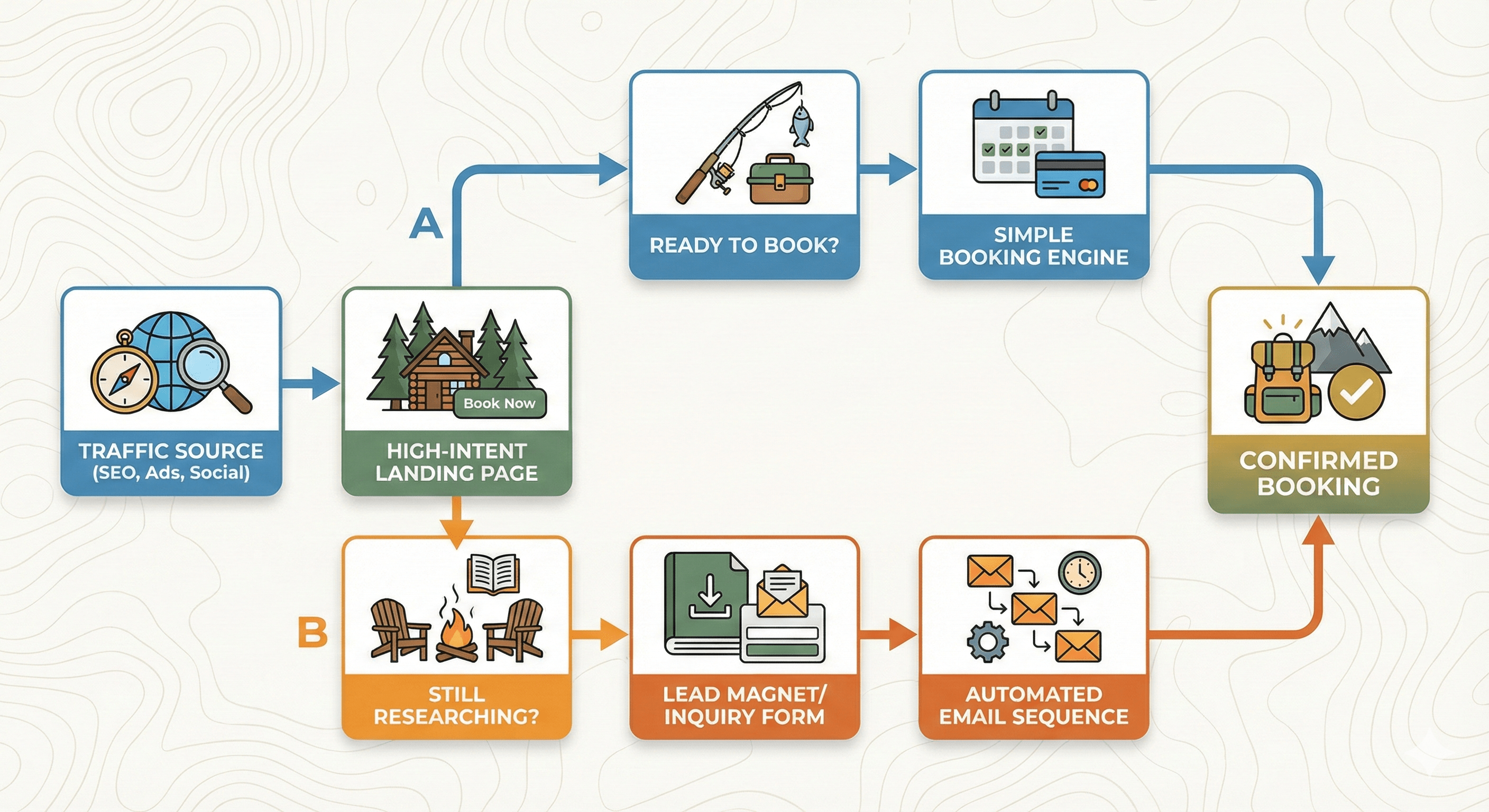
For outdoor businesses, that typically looks like:
- a website structured around priority experiences, not generic pages
- clear paths from interest to inquiry or booking
- booking and inquiry forms aligned to buyer readiness
- confirmation and follow-up communication that builds confidence
- inbound demand driven to pages built to convert
- tracking that shows what’s actually driving bookings
Instead of hoping visitors “figure it out,” the system guides them step by step.
The result is fewer wasted inquiries, clearer conversations, and more qualified bookings. All without needing more traffic. That said, add more traffic to a sales sytem firing on all cylinders and...boom you're growing.
The Hidden Cost of Treating Your Website Like a Brochure
A brochure-style website doesn’t fail loudly.
It fails quietly.
Traffic arrives.
People browse.
Then they leave.
From the outside, it looks like nothing is wrong. The site is live. The brand looks professional. The photos are strong.
But underneath, opportunities are slipping through the cracks.
The cost shows up as:
- inquiries that never happen
- prospects who leave without taking action
- paid traffic that doesn’t convert
- staff time spent chasing low-quality leads
- uncertainty about what’s actually working
Over time, this creates frustration.
Owners invest in redesigns, ads, or SEO hoping the next tactic will fix the issue — without realizing the core problem is structural.
A website can’t compensate for the absence of a system.
Without intentional paths, clear next steps, and proper follow-up, even strong demand turns into noise.
That’s why successful outdoor businesses don’t ask,
“Does our website look good?”
They ask,
“Is our system doing the work it should?”
When the answer is yes, bookings become predictable.
When it’s no, growth stays inconsistent.
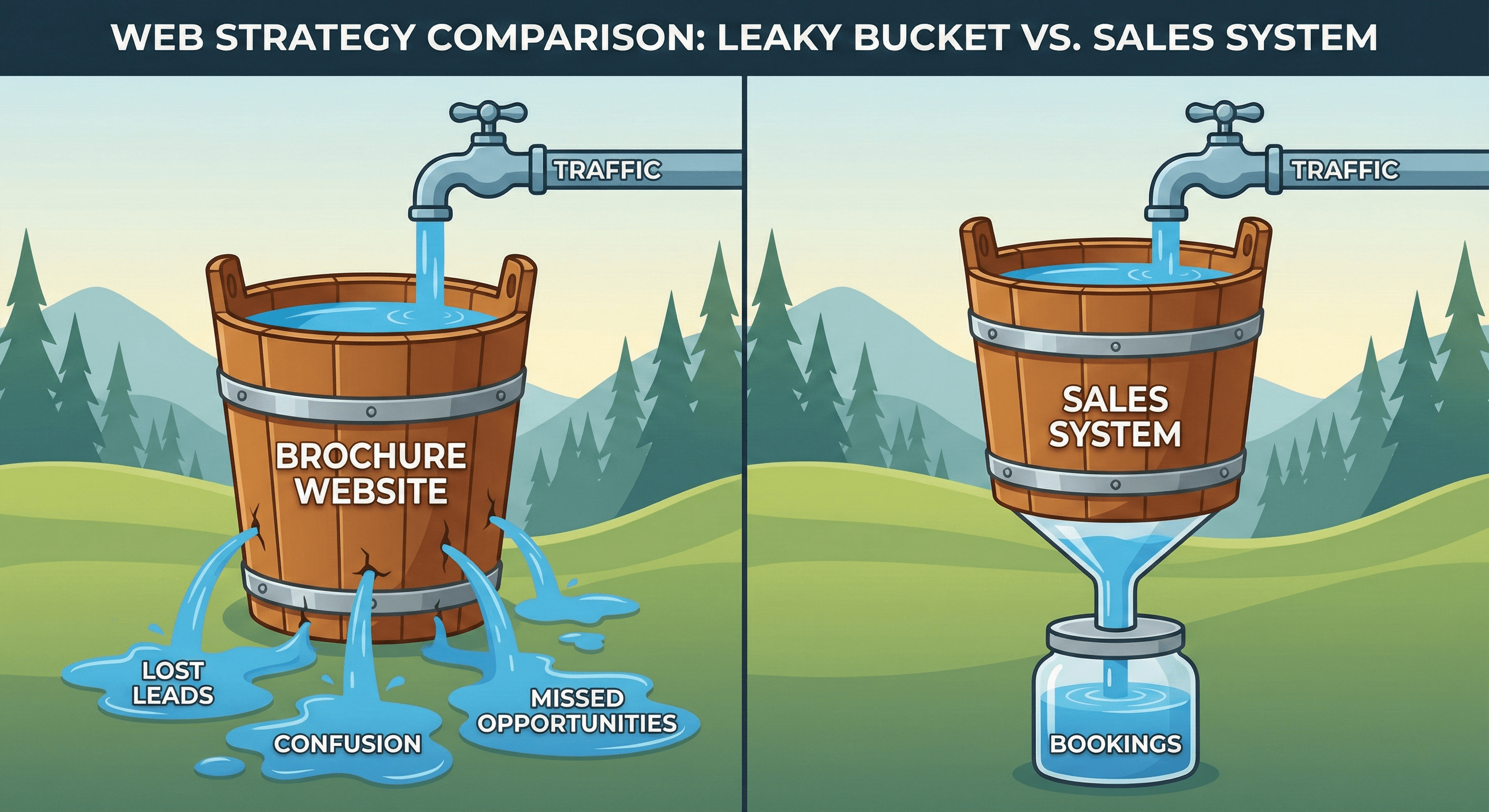
Why More Traffic Doesn’t Fix Booking Problems
When bookings are inconsistent, the default response is almost always the same:
“We need more traffic.”
So businesses invest in ads.
They push harder on social.
They hire someone for SEO.
And sometimes, traffic does increase.
But bookings don’t.
That’s because traffic doesn’t solve structural problems. It only exposes them.
If visitors arrive at a site that:
- doesn’t clearly guide them to a next step
- treats all visitors the same regardless of intent
- buries booking or inquiry options
- fails to follow up when interest is shown
then more traffic simply means more missed opportunities. You're wasting money pouring traffic towards something that doesn't convert.
In fact, increasing traffic without fixing the underlying system often makes things worse. Owners spend more money, see more activity, and feel more confused about why results aren’t improving.
This is why high-performing outdoor businesses don’t lead with tactics.
They fix the system first.
Once the foundation is solid, traffic amplifies what already works.
Before that, it just creates noise.
<!-- Optional internal link: link “fix the system first” to your System Overview / Offer page -->
When a Sales System Matters More Than Marketing
Marketing is useful — but only at the right time.
For high-value outdoor experiences, a sales system matters before marketing ever does.
A sales system answers questions marketing never can:
- What happens after someone shows interest?
- How do we qualify serious buyers?
- How do we reduce friction in the decision process?
- How do we know what’s driving bookings?
Without those answers, marketing becomes guesswork.
This is why many experience-based businesses feel stuck cycling through tactics:
- new website
- new ads
- new strategy
- same results
They’re trying to market their way out of a systems problem.
A proper sales system changes that dynamic.
It creates:
- clearer conversations with better-fit prospects
- fewer dead-end inquiries
- more confidence in pricing and positioning
- visibility into what’s actually working
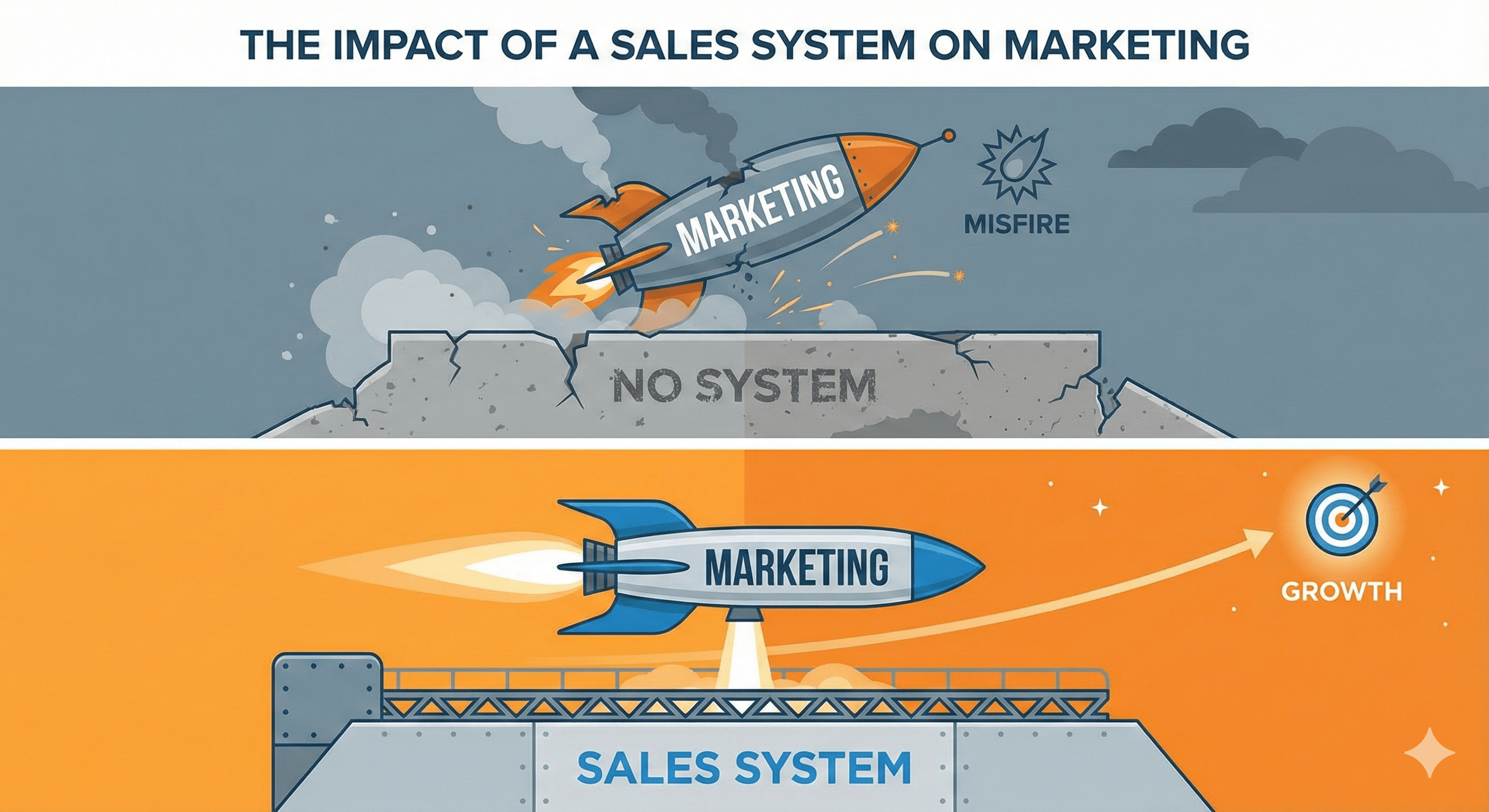
Marketing then becomes rocket fuel — not a last ditch effort. This is because the system has been pressure tested, it can withstand the load. So as you add more traffic, your business grows!
When the system is doing its job, every effort compounds instead of leaking.
Why This Matters More for Outdoor and Experience-Based Businesses
Outdoor businesses aren’t selling impulse purchases.
They’re selling experiences that require:
- trust
- timing
- confidence
- clarity
- investment
Whether it’s a guided trip, a retreat stay, or a multi-day experience, buyers need to feel certain before they commit.
That makes structure more important than volume.
When someone lands on an outdoor website, they’re usually asking themselves:
- Is this right for me?
- Is this worth the price?
- What happens if I reach out?
- What’s the next step?
A brochure-style website leaves those questions unanswered.
A sales system anticipates them.
It creates clear paths based on intent, removes uncertainty, and supports the decision-making process — without needing aggressive marketing or constant follow-up.
For experience-based businesses, this isn’t a “nice to have.”
It’s the difference between inconsistent inquiries and predictable bookings.
When It Makes Sense to Invest in a Sales System
Not every business needs a full sales system.
But if you’re selling high-value experiences and:
- one booking materially impacts your revenue
- you’re already generating interest, but bookings feel inconsistent
- your website looks good but doesn’t reliably produce inquiries
- you’re considering ads or SEO to “fix” performance
then the issue likely isn’t demand.
It’s structure.
A sales system makes sense when the goal isn’t more activity — it’s better outcomes.
Instead of guessing which tactic to try next, you build the foundation once and let everything else work on top of it.
The Difference Between Hoping and Owning the Outcome
Most outdoor businesses hope their website works.
They hope visitors click the right thing.
They hope inquiries come through.
They hope follow-up happens.
They hope bookings increase.
A sales system replaces hope with intention.
It gives you control over:
- how people move through your site
- how and when they reach out
- what happens after they do
- what’s actually driving revenue
That shift — from hoping to owning — is what separates inconsistent growth from predictable results.
Let's Wrap This Up
A website is without a doubt the star player, but on its own, is not a sales system.
For outdoor companies offering high-value experiences, relying on a website alone means leaving too much to chance. You need strong aquistion strategies, you need customer comms, and you need predictability.
A sales system removes friction, guides decisions, and turns interest into action — consistently.
If your business already has demand, the next step isn’t more traffic.
It’s building the system that supports it.
<!-- Optional internal link: link “building the system” to your System Overview / Offer page --><!-- Optional CTA block after article: “View the Sales System” or “Book a Call” -->
Related posts
Enjoy some of our latest posts. Go ahead, dig in.
A Website Is Not a Sales System (Here’s What Outdoor Businesses Are Missing)

The Modern Fishing Guide’s Marketing Ecosystem: Turning "Likes" into Deposits
How Outdoor Lodges Can Grow Bookings With Better Web Design and SEO