
Hiring someone to rebuild your lodge website means trusting them with next season’s bookings. A good designer pays for the site many times over. The wrong one costs you a year of inquiries you never see.
I build lodge websites, and I fish. Here is what I would look for if I were on your side of the table, including the questions I would ask on the first call. Use it on anyone you are considering, me included.
1. Lodge sites you can actually click through
Start with their portfolio, and skip the pretty thumbnails. Open the live sites. A designer who understands lodges will have built sites that answer the questions your guests ask:
- What is the fishery, and what does a day look like?
- What does a trip cost, and what is included?
- When is the best time to come?
- How do I get there, and what do I bring?
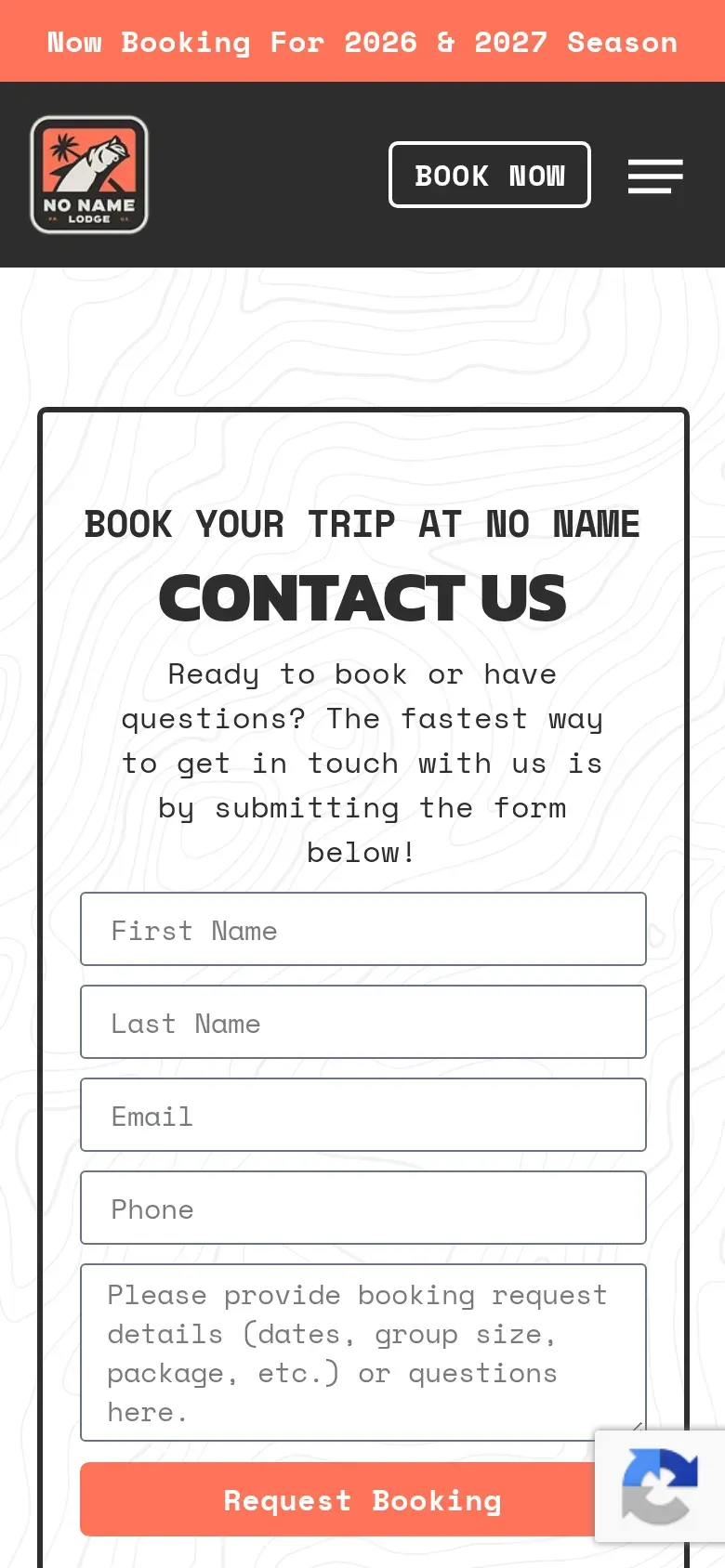
- How do I ask about dates?
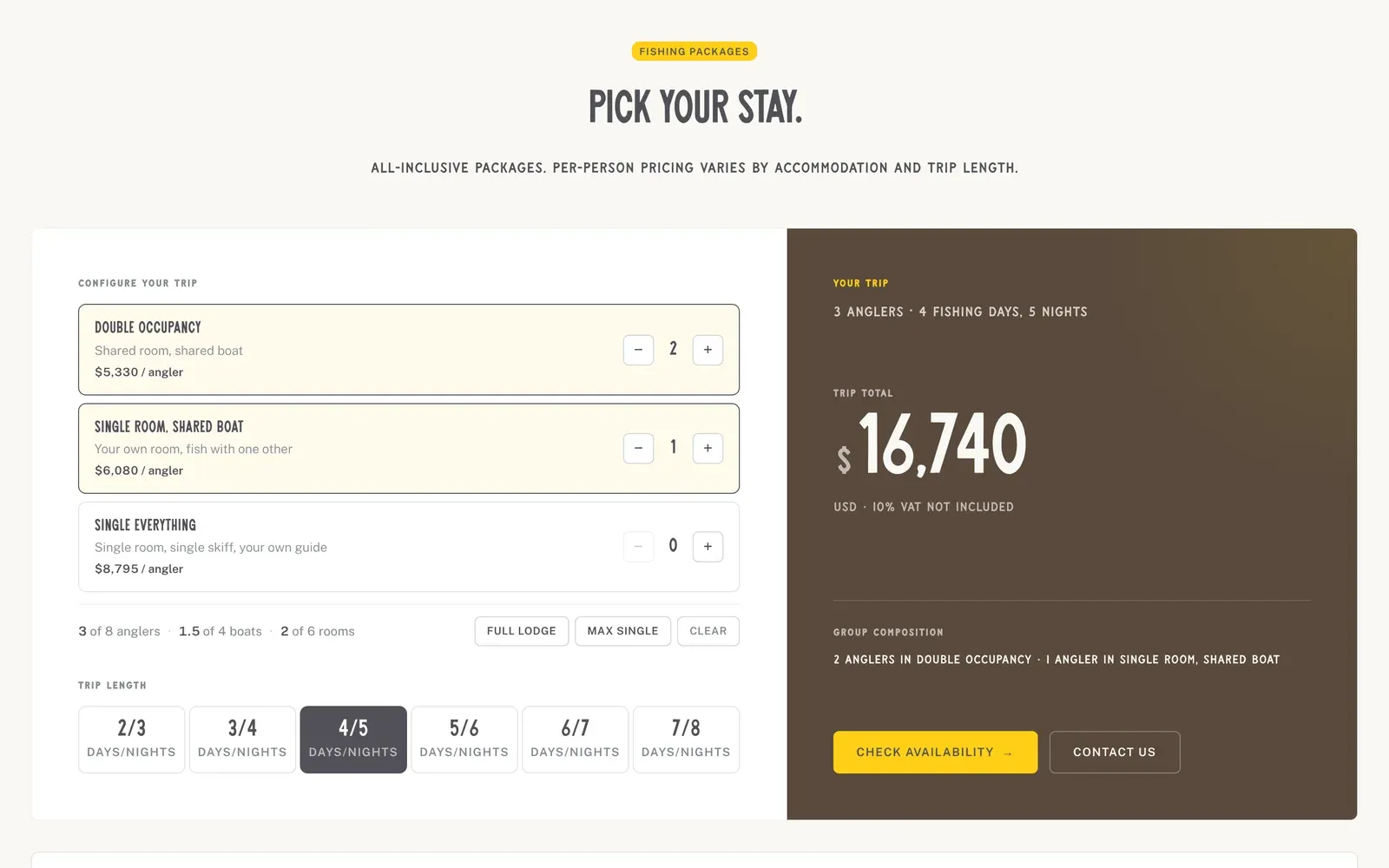
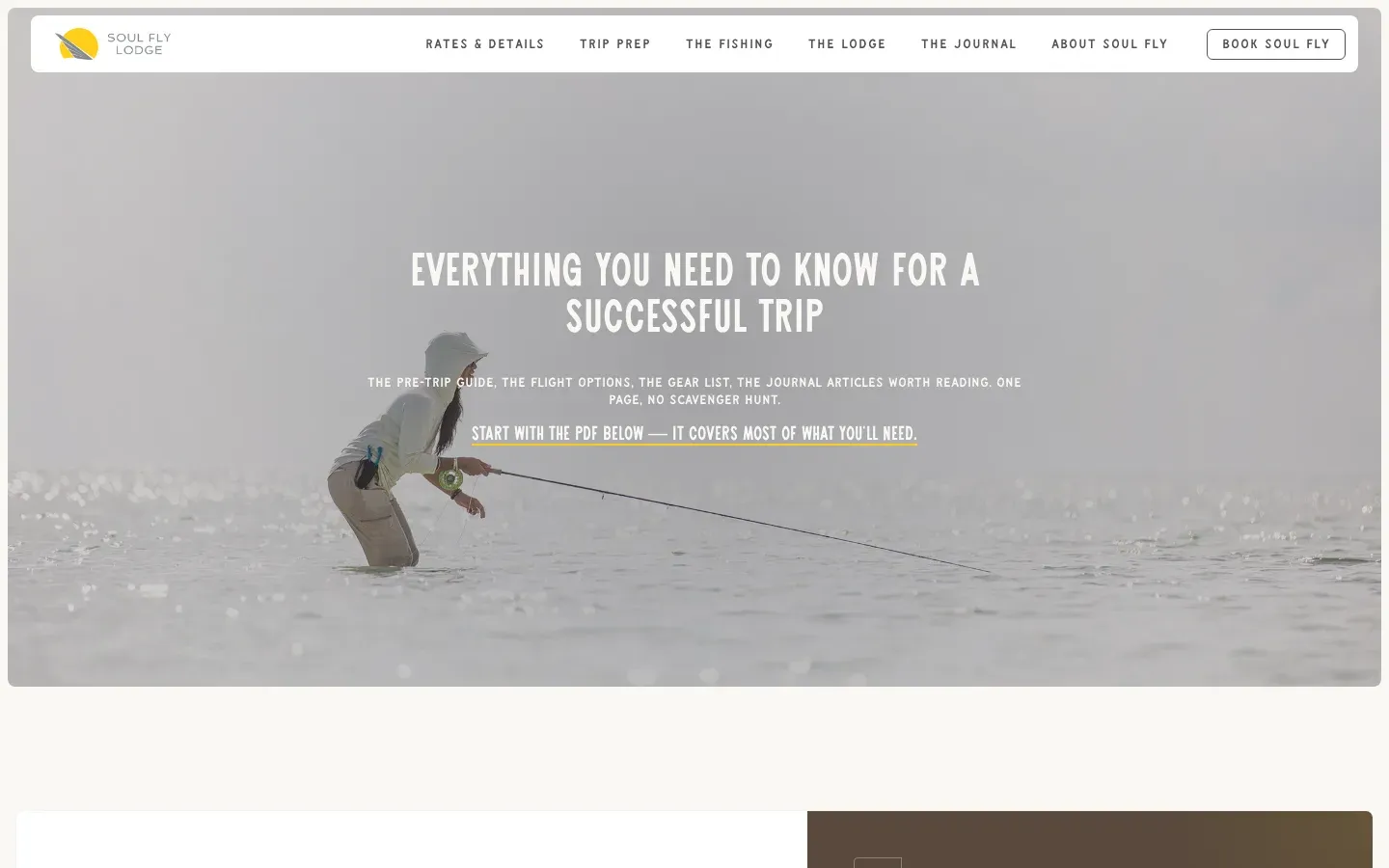
If you click through three of their lodge builds and can’t find rates, seasons or travel info on any of them, that tells you how they think. You can see the lodge work I have done on our work.
2. Results with real numbers, and how they were measured
“Beautiful design” is not a result. Booking requests are. Ask every designer for numbers from lodge clients and ask how they were counted.
Here is what I can point to. No Name Fly Lodge, a tarpon lodge in Puerto Rico, received 378 booking requests in the first 12 months after launch. Soul Fly Lodge in the Bahamas generated 78 leads in its first 4 months.
When a designer shares numbers, ask two follow-ups. What counts as a lead? And where do those inquiries land, so nobody misses one? If they can’t answer, the number is decoration.
3. They understand how a lodge trip gets booked
A lodge trip is a big decision. A week of vacation, a flight, and often a spouse or a few buddies who need convincing. Guests read every page before they email, and they are comparing you to two or three lodges on the same water.
A designer who gets this will ask you questions before they talk about colors and fonts. Who books with you? How far ahead? What does a good inquiry look like? What questions do you answer over and over by email? If the first call is all about their process and none of it is about your guests, keep looking.
4. Pricing you can see before the first call
Lodge websites are not a mystery purchase. A designer who works with lodges regularly should be able to tell you roughly what it costs before you get on a call.
My pricing is on the site. Up to 12 pages is $4,000. Up to 18 pages is $6,000, and that is the right tier for most lodges. Larger lodges with deeper content start at $8,000 for up to 25 pages. I broke down what moves the price in what a fishing lodge website costs.
Whoever you talk to, get the scope in writing: how many pages, who writes the copy, who handles photos, whether old URLs get redirected, and whether analytics are set up at launch.
5. A plan for getting found
A new site that loses your Google rankings is a step backward. Ask how they handle the move: redirects from every old URL, a page for each fishery and species, real answers to guest questions, and structured data so Google and AI assistants can read your rates, seasons and location.
More anglers now ask ChatGPT or Google’s AI for the best lodge on a given river or flat. The lodges that get named are the ones whose sites state the facts plainly. I covered that in how fishing lodges get recommended by AI assistants.
6. Built for a phone, with your real place on it
Most of your traffic is on a phone, often from someone planning a trip on their lunch break. Pull up the designer’s lodge builds on your own phone. Do they load fast? Can you find the rates and the inquiry form without pinching and zooming?
Then look at the photos. Guests want to see your water, your boats, your rooms, your guides and fish in hand. If a portfolio leans on stock photos of the wrong species, that designer will do the same to you.
7. What happens after launch
Ask who owns the domain, the site and the content. (You should.) Ask who hosts it, who fixes it when something breaks in the middle of your season, and how fast they respond.
Every build I do runs on a Care Plan. Essential is $150 a month and covers hosting, platform updates, performance monitoring and minor fixes, plus small text, photo and price swaps. You always have a direct line to me. Bigger lodges and lodge groups usually land on Growth at $300 a month or a custom Partner plan from $1,000. Compare Care Plans.
Red flags
- No lodge or outdoor work in the portfolio, or only mockups.
- They won’t give you a price range until after a long discovery process.
- They promise a number one ranking on Google.
- They want a long SEO retainer before the site itself works.
- You can’t tell who will actually build your site.
- They can’t explain how you would update rates or seasons yourself.
Questions to ask on the first call
- Can I see two or three lodge sites you built that are live right now?
- What results have those lodges seen, and how did you count them?
- What does my site cost, and what exactly is included?
- How do you protect my current Google rankings during the move?
- Who builds the site, and who do I call after launch?
- How long will it take, and can it be live before my booking season?
For reference, my typical build is 4 to 6 weeks from kickoff to launch. You can see every step on my process page.
Why I build lodge sites this way
Start with the work. Click through the lodge sites, check the numbers, and compare the pricing. If it holds up, here is the last thing worth knowing. Flood Tide is one person. When you hire me, the person who learns your lodge on the first call is the same person who designs it, builds it and answers your email after launch. No handoffs, no account managers, no agency markup.
If your lodge needs a site that fills the calendar, start with the lodges page and tell me about your season.