
Most web designers won’t put a number on a lodge website until you get on a call. I understand why, but if you’re planning next season’s budget, you need a number before you need a call. So here it is, along with what moves it up or down.
The short answer
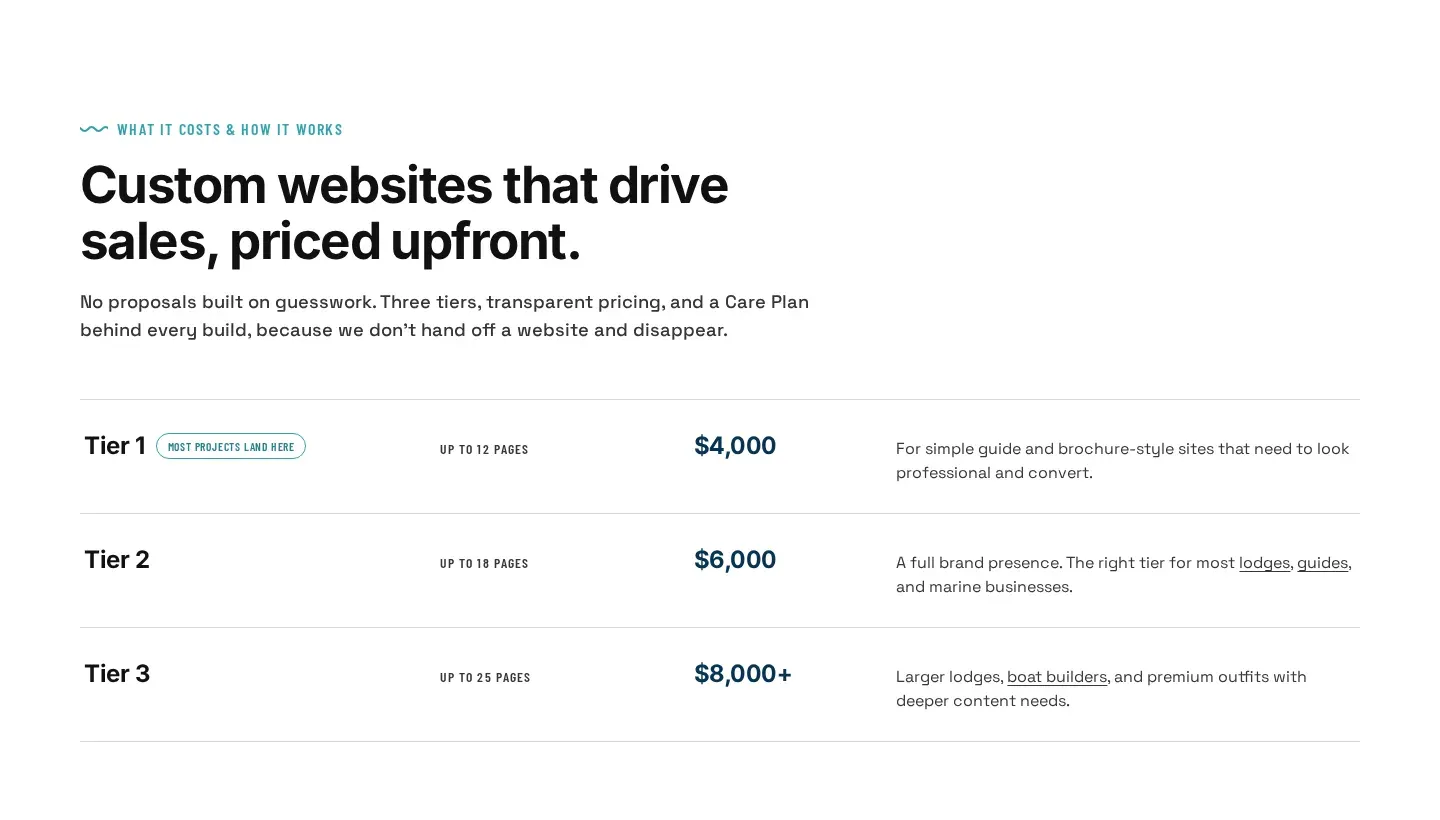
Our builds start at $4,000 for up to 12 pages. A build with up to 18 pages is $6,000, and that’s where a lot of lodges land. Larger lodges with more programs and deeper content run $8,000 and up for up to 25 pages. Additional pages beyond your tier are $250 each.
The price is flat and published on our web design page, so you’ll know the number before we start. Most builds take about 4 to 6 weeks from kickoff to launch.
For a smaller lodge with one fishery and simple packages, 12 pages can cover it: a homepage, a page on the water, a page on the fish, a page on how a day runs, rates and packages, the lodge itself, your guides, travel and planning, an FAQ, and an inquiry page. A lodge with several fisheries, a hunting program, or a lot of travel logistics usually needs more room. What those pages need to do is covered in what a fishing lodge website needs to turn visitors into booking requests.
How many pages your lodge needs
Page count is the biggest single driver, and for lodges it comes down to how much there is to explain.
Anglers book the fishing first and the lodge second. On No Name Fly Lodge we split the story into The Fishery, The Fish and The Fishing, so each page answers one question well. That structure works, and it’s also where page count grows. If you fish two very different waters, run a mothership trip alongside the lodge, or offer upland or waterfowl hunts in the off months, each of those deserves its own page. Cramming them onto one page is how guests end up confused about which trip they’re asking about.
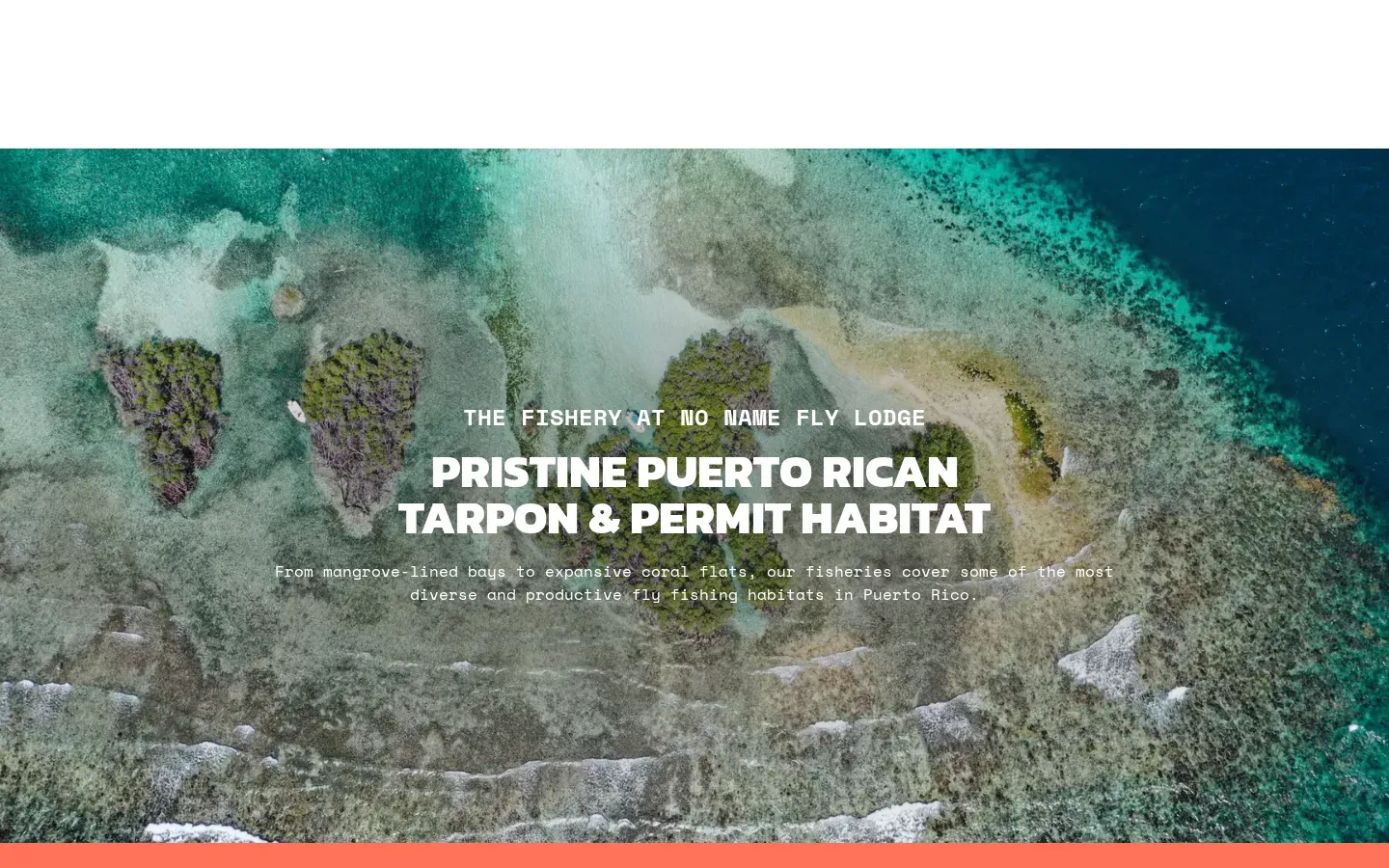
The same goes for seasons. If your fishing changes a lot through the year, a season guide that tells anglers what to expect month by month is worth building, and it adds a page or two.
How you sell trips
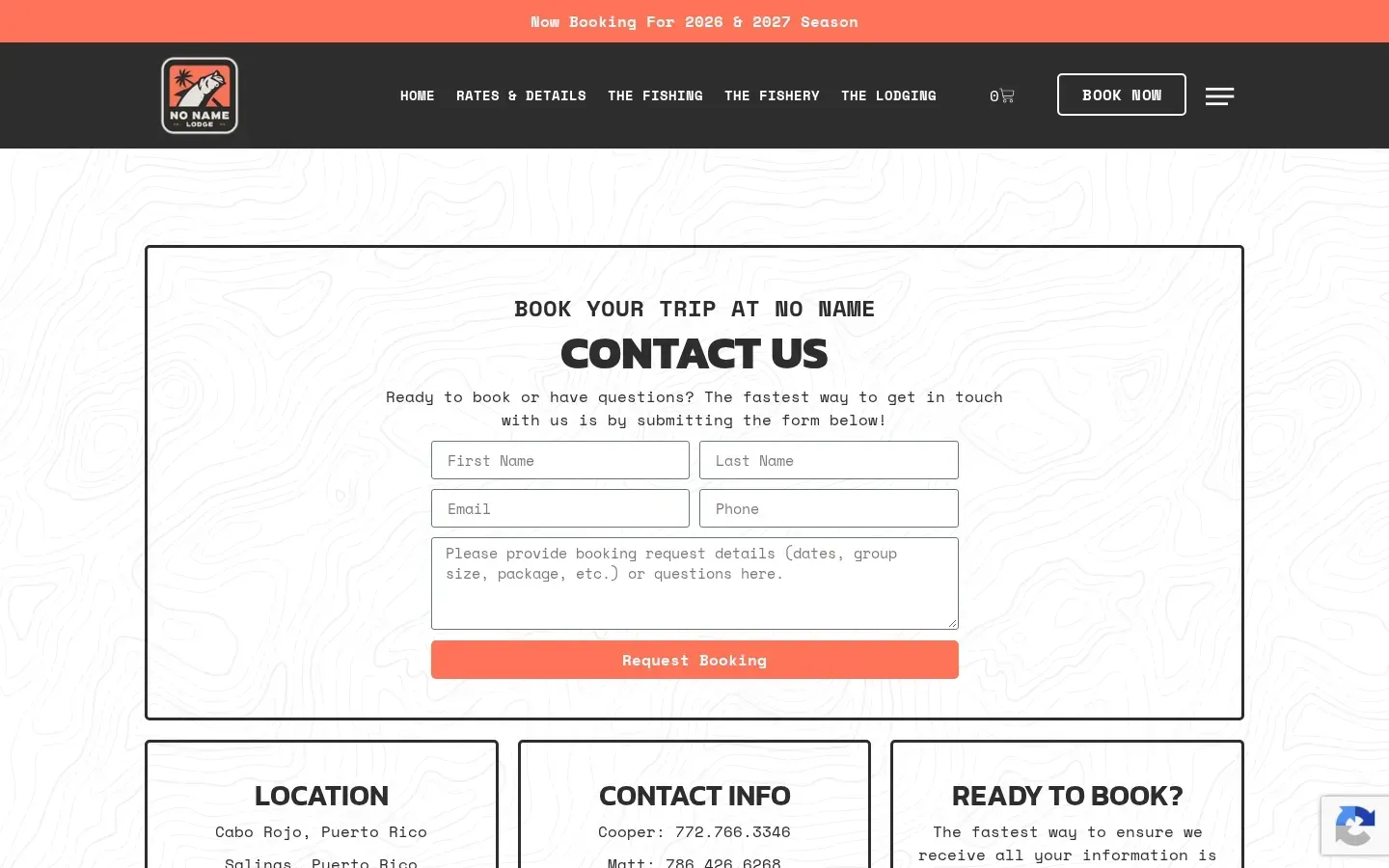
Most lodges sell by inquiry, not instant booking, and that’s the right call. A week at a lodge involves dates, group size, rooms, skill level and often a nonangling spouse. Your inquiry form should collect what you need to reply with a real answer, so you aren’t going back and forth five times before you can quote.
A single lodge with one package and a simple form is quick to set up. A lodge with several packages, shoulder season rates, group buyouts and different deposits for each program takes more planning, because the rates page and the form both have to make all of that clear without overwhelming anyone.
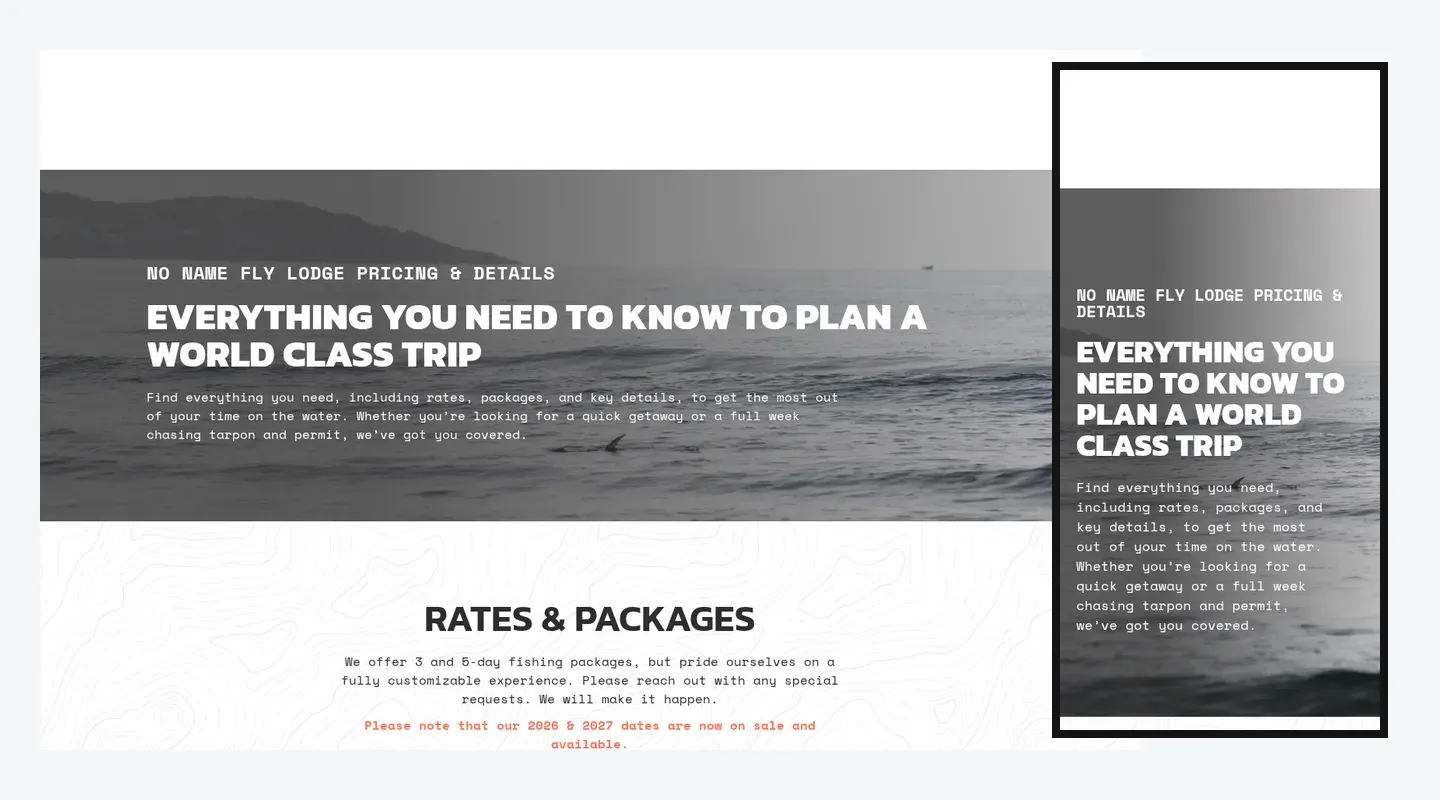
Travel and planning information
This is the part lodge owners tend to underestimate. Guests flying into a remote destination need to know which airport, how they get from there to you, what to pack, what licenses they need, and what the deposit and cancellation terms are. That content takes real work to get right. When it’s missing, those questions land in your inbox, or the guest books somewhere that already answered them.
How much content we create with you
If you come in with great photos, a written description of your water and your rates ready to go, the build moves fast. If we’re writing every page together from your notes and a few phone calls, that takes more time and it shows up in the price. Either way is fine. Most lodge owners are better at running a lodge than writing about one, and that’s what we’re here for.
Moving off your old site
If your current site ranks for searches that matter, we set up redirects so you keep that traffic. An older site with years of pages takes more care to move than a five page site.
What I’d skip
Don’t pay for a custom booking engine for a lodge. Your trips are high value and personal, and the inquiry, a real reply from you, and a deposit is how most lodges close them. Spend the money on pages that sell the water and answer the planning questions instead.
I’d also skip the “we’ll just update the old template” route if the site is more than a few years old. You’ll pay for patches on a site that still doesn’t load fast on a phone or show your rates clearly, and you’ll be rebuilding in two seasons anyway.
The inquiry follow-up add-on
A lodge inquiry is worth a lot, and it’s easy to lose in the middle of the season when you’re on the water all day. The inquiry follow-up add-on sets up a CRM, routes each form to the right person, and builds follow-up sequences around how you sell, so every inquiry gets captured and followed up automatically. It’s $1,500 and available on any build. If you’re getting a steady stream of inquiries and replying from your phone at 10 at night, it pays for itself fast.
The Care Plan
Every site we build runs on a Care Plan. It covers hosting, platform updates, performance monitoring, minor fixes and a direct line to the people who built your site. Essential is $149 a month and includes an hour of design and dev work every month. Growth is $300 a month and adds three hours a month for new sections, rate changes, seasonal updates and ongoing improvements.
The Care Plan is required, because it’s how we stand behind the work after launch. For a lodge, that’s the difference between next year’s rates going up the week you decide them and a stale rates page that sends the wrong number to every guest who reads it.
How to compare the quotes you have
When you line up quotes, make sure you’re comparing the same things:
- Does each part of the trip (the water, the fish, the lodge, the guides) get its own page?
- Are your rates, inclusions and deposit terms laid out on the site, or hidden behind a form?
- Who writes the pages?
- Does the inquiry form collect dates, group size and trip type?
- Are redirects from your old site included?
- What does hosting and support cost each month, and who actually does the work?
A cheap build on a generic template can cost you more in lost inquiries over one season than a solid build would have cost up front.
What I can show you
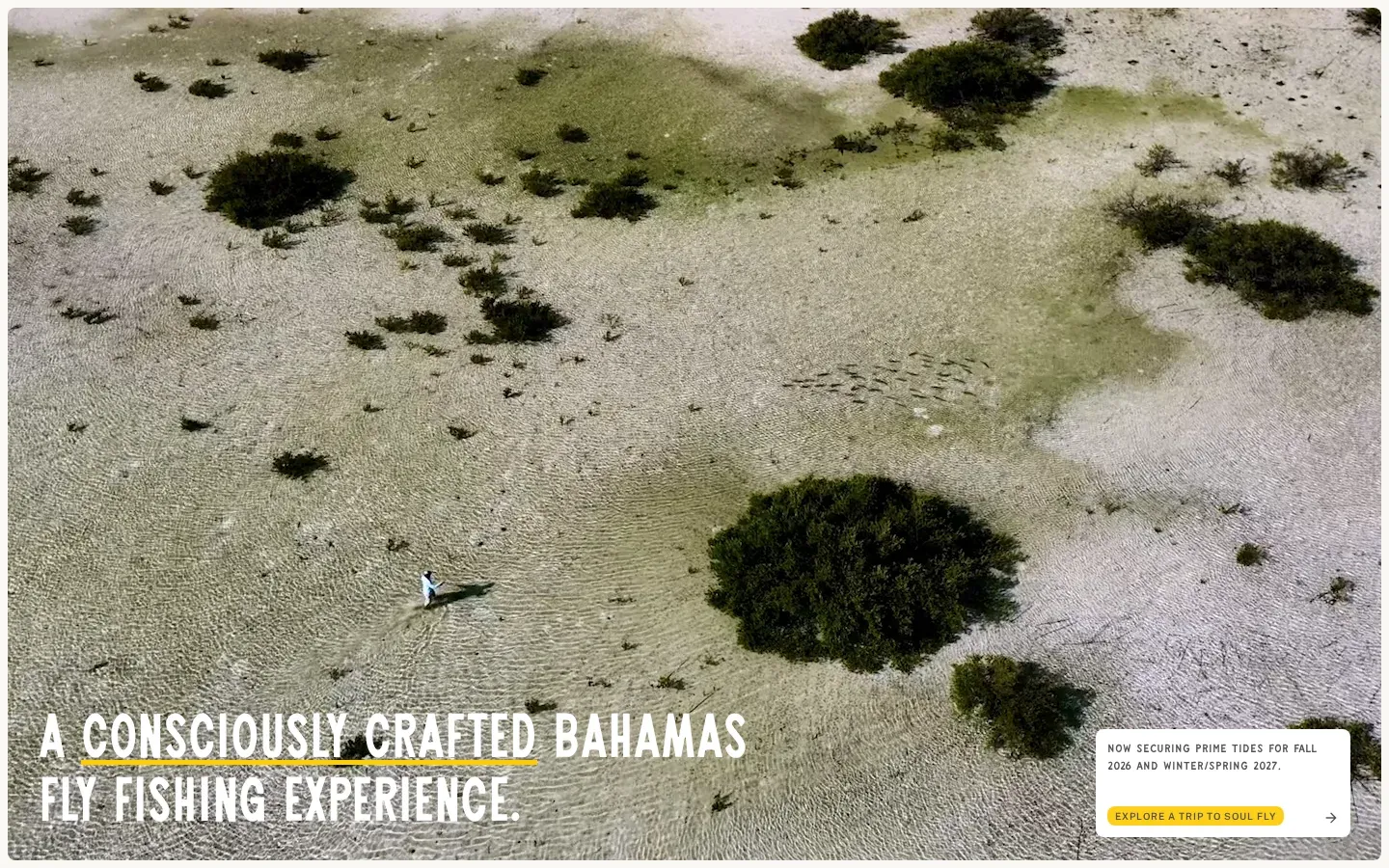
I’ve built for fly fishing lodges in Puerto Rico and the Bahamas. No Name Fly Lodge brought in 378 booking requests in its first 12 months on the new site. Soul Fly Lodge is another destination lodge build you can see on our work page, along with the pages I described above. I haven’t built for a hunting lodge yet, but the job is the same: sell the place, answer the planning questions, and make it easy to ask about dates.
Plan backward from your season
The biggest variable in a 4 to 6 week build is how fast photos, rates and decisions come back from your side. The off season is the best time to do this, so the new site is live before next year’s guests start planning. Tell me when your booking season opens and we’ll plan backward from it.
You can see how a build works step by step, or read more about how we approach fishing and hunting lodges. If you want a straight number for your lodge, tell me about your water, your packages and how you take inquiries now.