
More anglers are starting their trip planning by asking an AI assistant. Instead of searching “fly fishing lodge Bahamas” and clicking through ten tabs, they ask Grok or ChatGPT something like “What are the best fly fishing lodges for bonefish in the Bahamas for a group of four?” and get back a short list with a few sentences on each.
If your lodge is not on that list, you are not in the running for that angler. Nobody fully controls what these assistants say, and anybody who promises you a spot is selling something. But there are practical things that make your lodge easier to find, easier to understand and easier to recommend. Most of them are just good website work that a lot of lodges skip.
Here is what I focus on.
1. Make the basic facts impossible to miss
An assistant can only recommend you for a question it can match you to. If your site never plainly says where you are, what you fish for, and when, you are hard to match.
On your site, in plain text (not baked into an image), say:
- Where the lodge is: country, region, nearest town and nearest airport.
- What you fish for, species by species.
- The style of fishing: wading, poling a skiff, drift boat, and so on.
- Your seasons, month by month.
- How many anglers you host at a time.
- What a package includes and roughly what it costs.
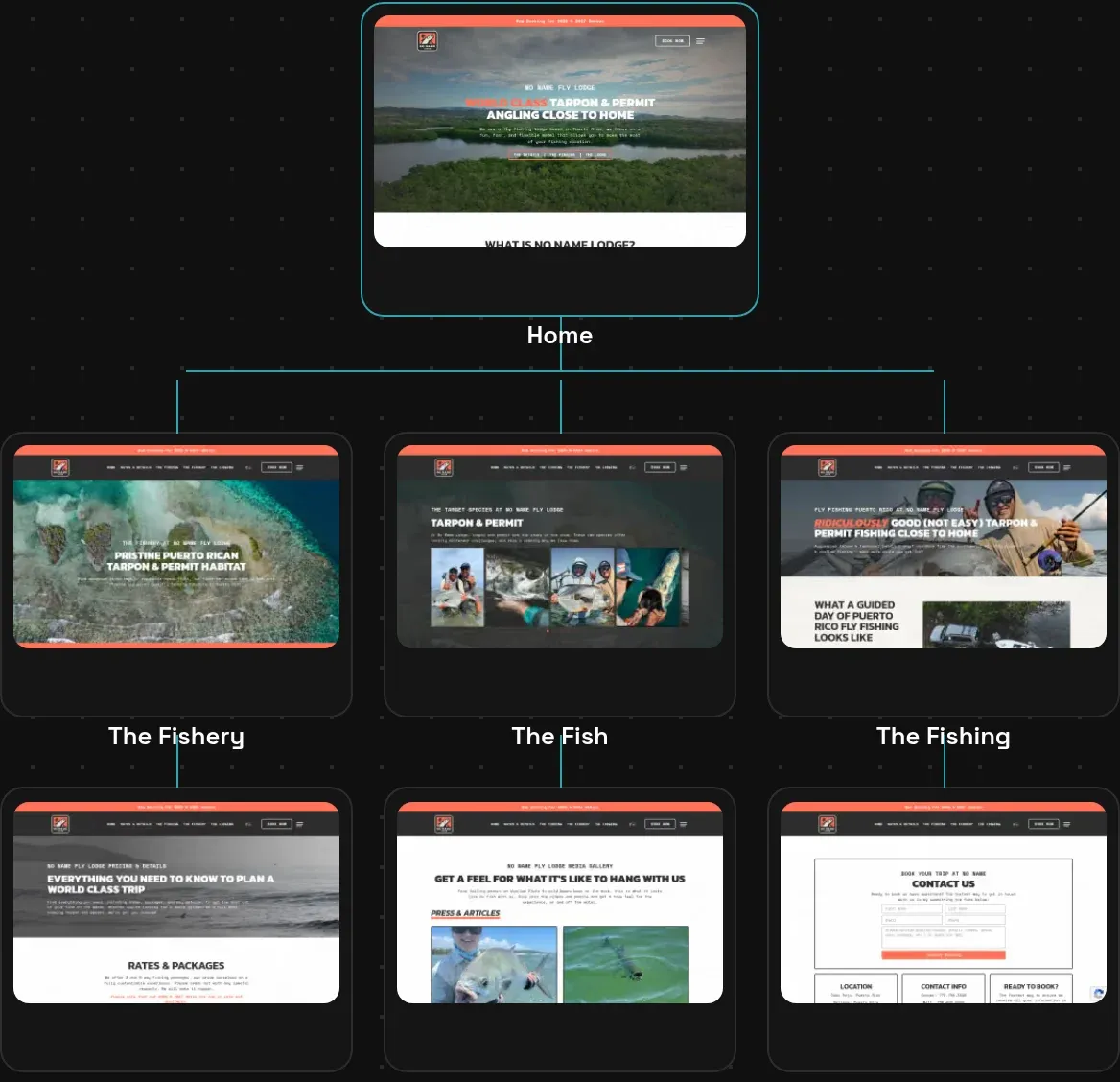
No Name Fly Lodge’s homepage says it right up top: a fly fishing lodge in Puerto Rico, focused on tarpon and permit, hosting a small group each week. That is the kind of sentence an assistant can pick up and repeat.
2. Build pages that answer one question each
Assistants pull from pages that answer a question clearly. A long homepage that tries to say everything is harder to use than a set of pages that each do one job.
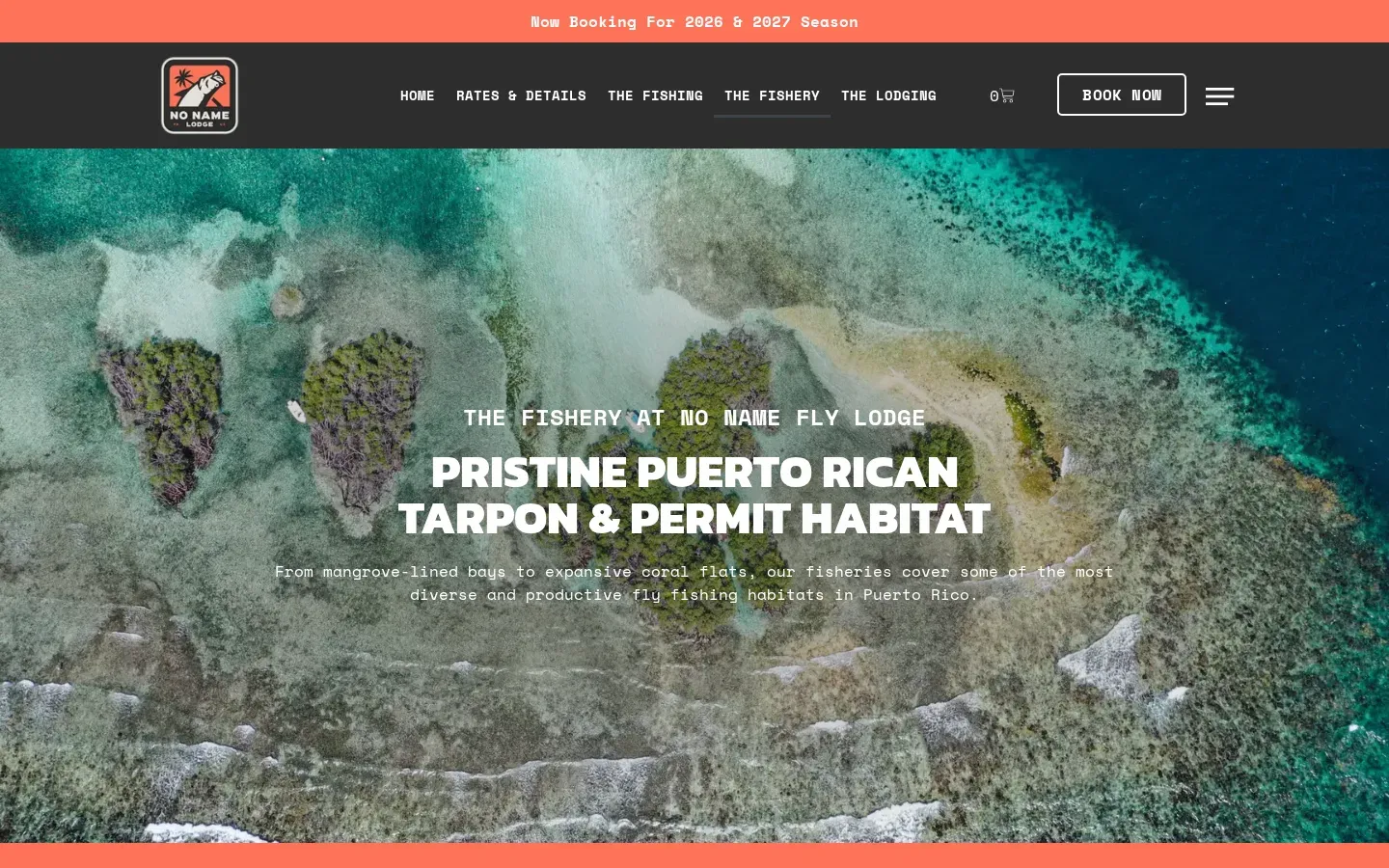
That is why the No Name Fly Lodge page map is The Fishery, The Fish, The Fishing, Rates and Details, Media Gallery and Contact. Each one answers a question an angler asks before booking. When someone asks an assistant “What is the permit fishing like in Puerto Rico?”, a page about exactly that has a much better shot at being used than a paragraph buried halfway down a homepage.
3. Write the questions down, then answer them
Every lodge owner already knows the questions. You get them by email every week. When is the best month? Do I need a license? What rod weight should I bring? Is it good for a beginner? Put those questions on the site, word for word, with short and direct answers.
A real FAQ section helps anglers, and marked up with FAQ schema it gives search engines and assistants a clean question and answer to work with.
4. Publish real fishing content, not filler
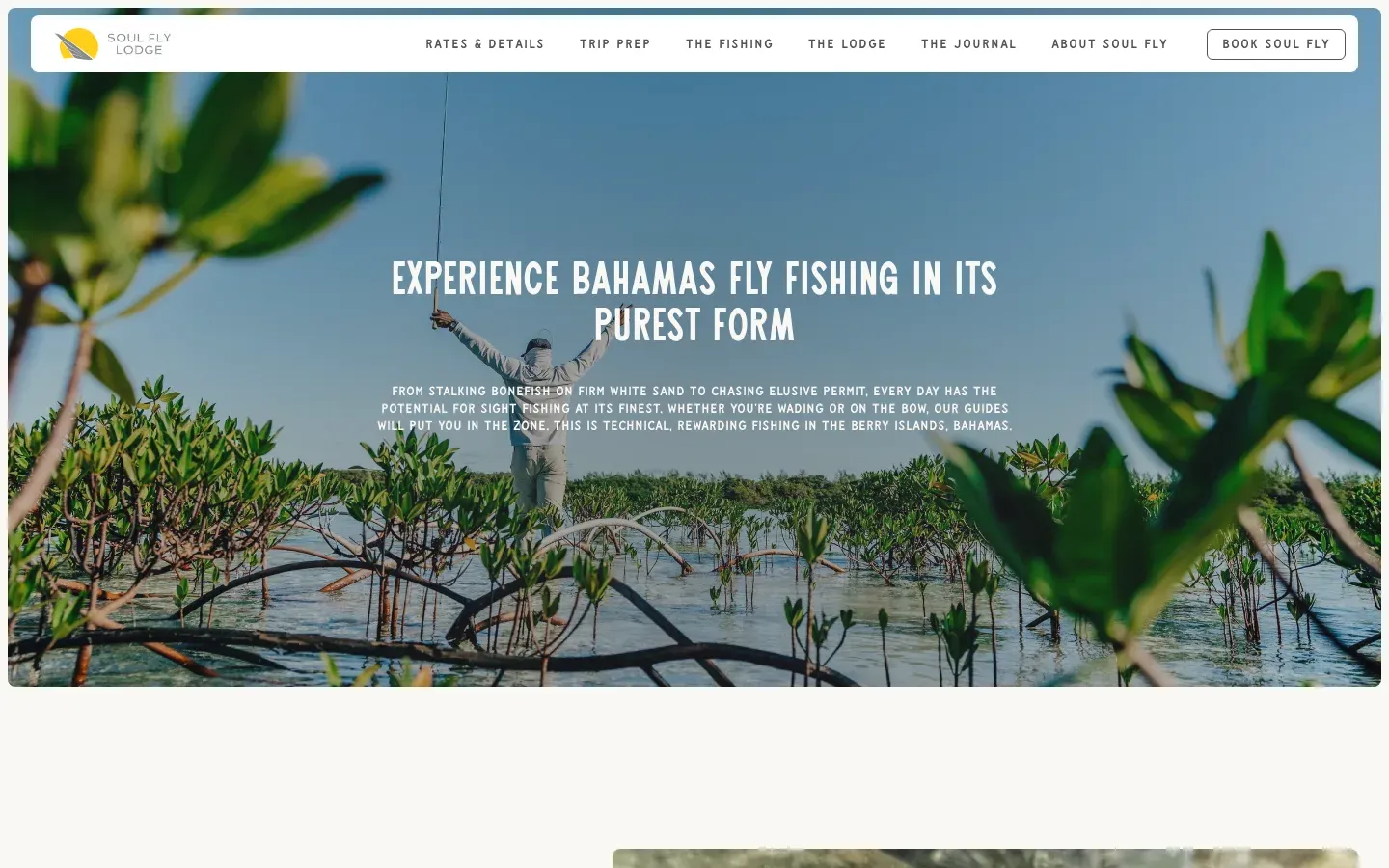
Soul Fly Lodge has a journal with real fishing scenarios from the flats. That gives anglers a feel for the trip, and it gives search engines and AI assistants something specific and real to cite. A post about how the bonefish behave on a falling tide in a particular month beats a generic “Top 10 reasons to visit the Bahamas” every time.
Write what your guides talk about at dinner. That is the content nobody else can copy.
5. Add structured data
Schema markup tells machines what your page is about in a format they read easily. For a lodge, the useful pieces are usually:
- LodgingBusiness or LocalBusiness with your name, address, phone and location.
- FAQPage on your FAQ content.
- Offer or price information on your rates page where it fits.
This is not magic, and it does not replace good content. It just removes guesswork.
6. Keep your name and details the same everywhere
Assistants pull from more than your site. Your Google Business Profile, Bing Places listing, review sites, fly shop hosted trip pages, magazine write ups and forum threads all feed the picture. If your lodge name, location and species are written three different ways across those places, you are harder to pin down.
Pick one name and one description, then use it everywhere. Claim your Google Business Profile and Bing Places listing if you have not. Bing matters here because some assistants lean on Bing’s index when they search the web.
7. Earn mentions from places anglers trust
When an assistant answers “best lodges in a region,” it leans on what other people say about you. Reviews on Google and other review platforms, hosted trip listings from fly shops, guide features, and coverage in fishing publications all count. You cannot fake this, and you should not try. Ask happy guests for reviews, keep relationships with the shops that host trips with you, and say yes to writers who want to come fish.
8. Do not block the crawlers you want
Check your robots.txt file. Some sites block AI crawlers by accident through a security plugin or a template setting. If you want to be recommended, the search crawlers that assistants use need to be able to read your pages. Your web person can check this in a few minutes.
9. Make the click worth it
Getting recommended is only half of it. When the angler clicks through, the site still has to answer their questions and make it easy to ask about dates. That is the same work I cover on our fishing lodge websites page: the fishery story, published rates, seasons, travel info and one clear inquiry form.
Where I would start
If I were a lodge owner with one weekend to spend on this, I would write a plain fact block for the homepage, turn my most common email questions into an FAQ, claim Google and Bing listings with matching details, and check robots.txt. Then I would start writing one real fishing post a month.
If you want help with the site side, you can see how we work on our process page. And if your site already does all of this, good. Go fishing.