
No Name Fly Lodge is a small fly fishing lodge in Puerto Rico, based in Cabo Rojo with water in Salinas too. They fish for tarpon and permit, host a small group of anglers each week, and do a lot of business with groups of buddies and hosted fly shop trips. It is the kind of operation I love: fishy guides, real personality, and fishing you have to work for.
The brief was simple. They needed a website that could represent the lodge experience and turn visitors into booking requests. Like any destination lodge, the site had to sell the place, make the offering clear, and catch anglers while they were still planning.
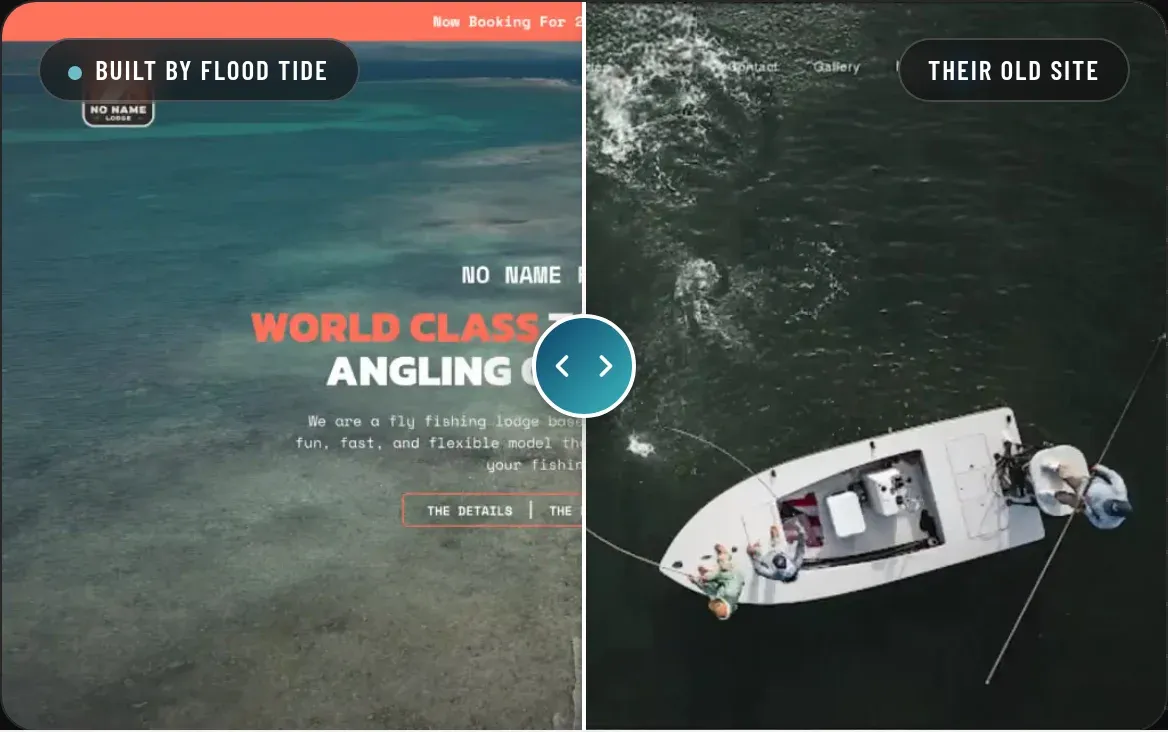
We launched it in April 2025. In its first 12 months, it brought in 378 booking requests. Here is how it was put together.
Strategy: one question per page
Every build starts with figuring out who books and what a good inquiry looks like. For No Name, the guest is a saltwater angler, anywhere from a first timer to someone who has chased permit for years, often the organizer for a group, who is comparing a few destinations for tarpon and permit.
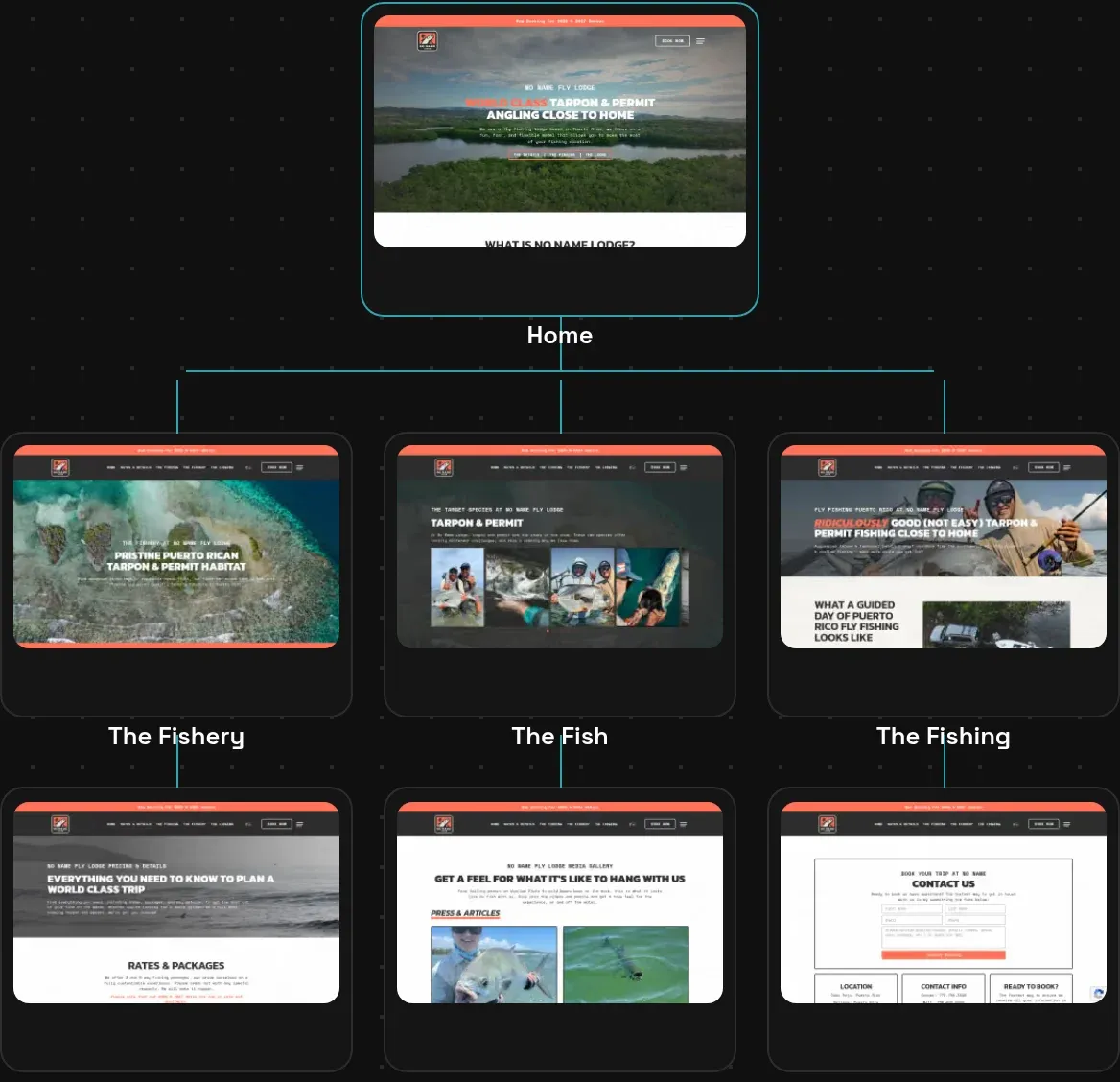
That angler has a predictable set of questions, so we built the page map around them:
- Home: Who you are, where you are, and what you fish for.
- The Fishery: The water and the kind of fishing.
- The Fish: Tarpon, permit, and the bonus species.
- The Fishing: What a day actually looks like.
- Rates and Details: Packages, what is included and what is not.
- Media Gallery: The real place, real fish and real people.
- Contact: One job, getting a booking request.
Each page answers one question well. Nobody has to dig through a long homepage to find out whether the permit are on foot or from a skiff. It also makes the site easier for search engines and AI assistants to understand, because each page is clearly about one thing.
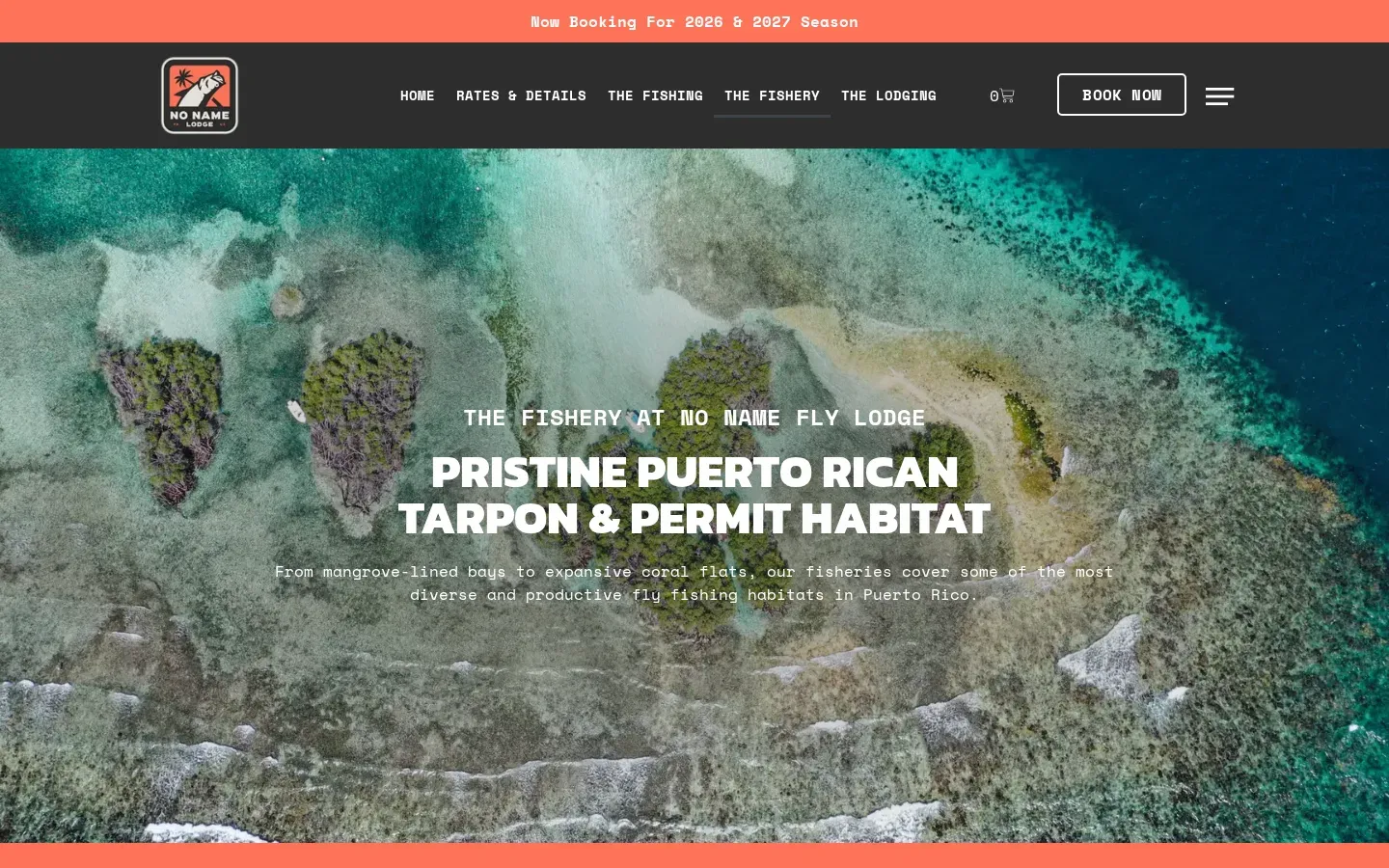
Design: homepage first
We designed the homepage at full fidelity before building anything else, and locked the direction with the lodge before moving on. That keeps a build moving. Once the homepage is right, every other page inherits it and there are no surprises late in the project.
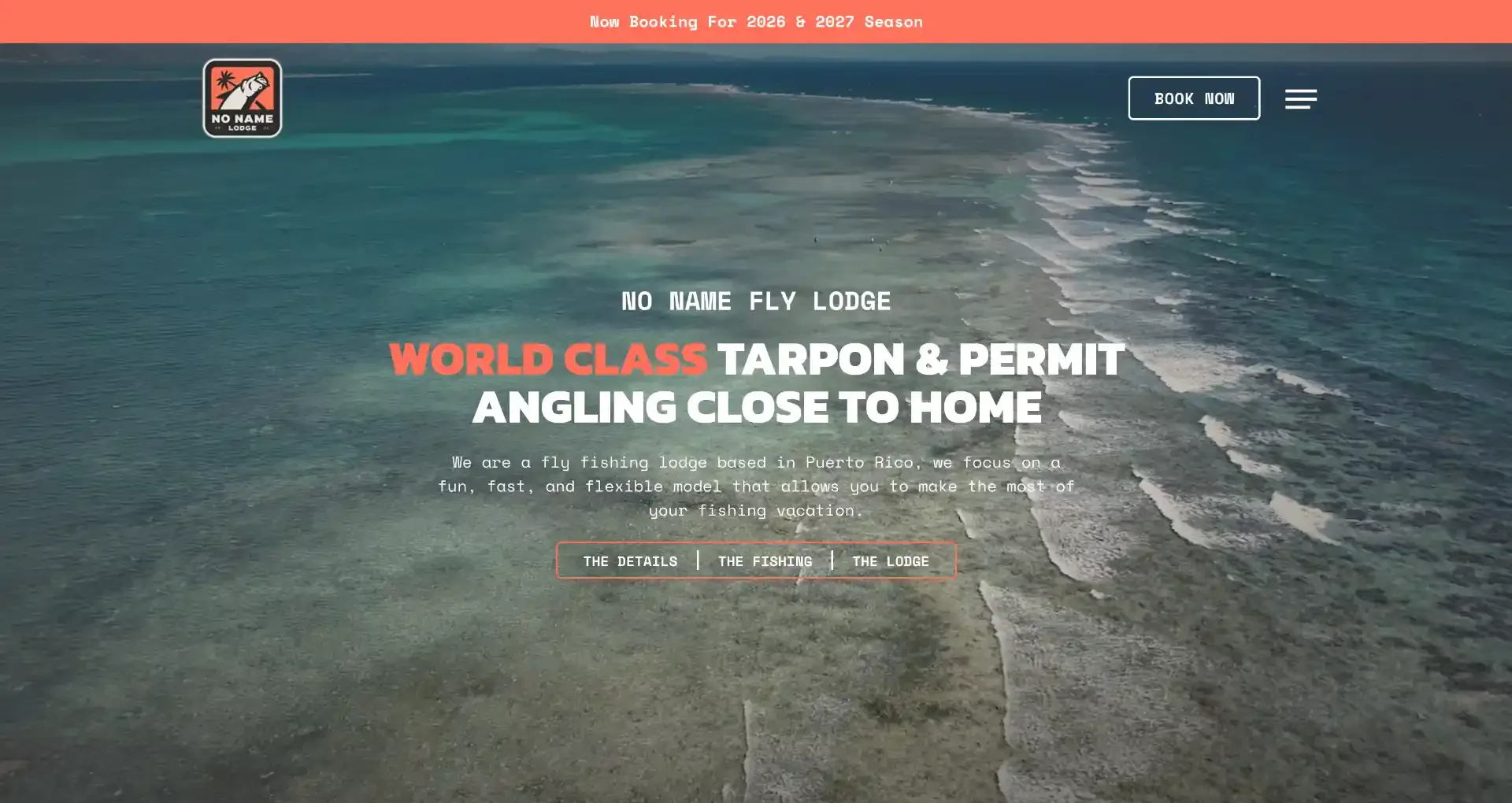
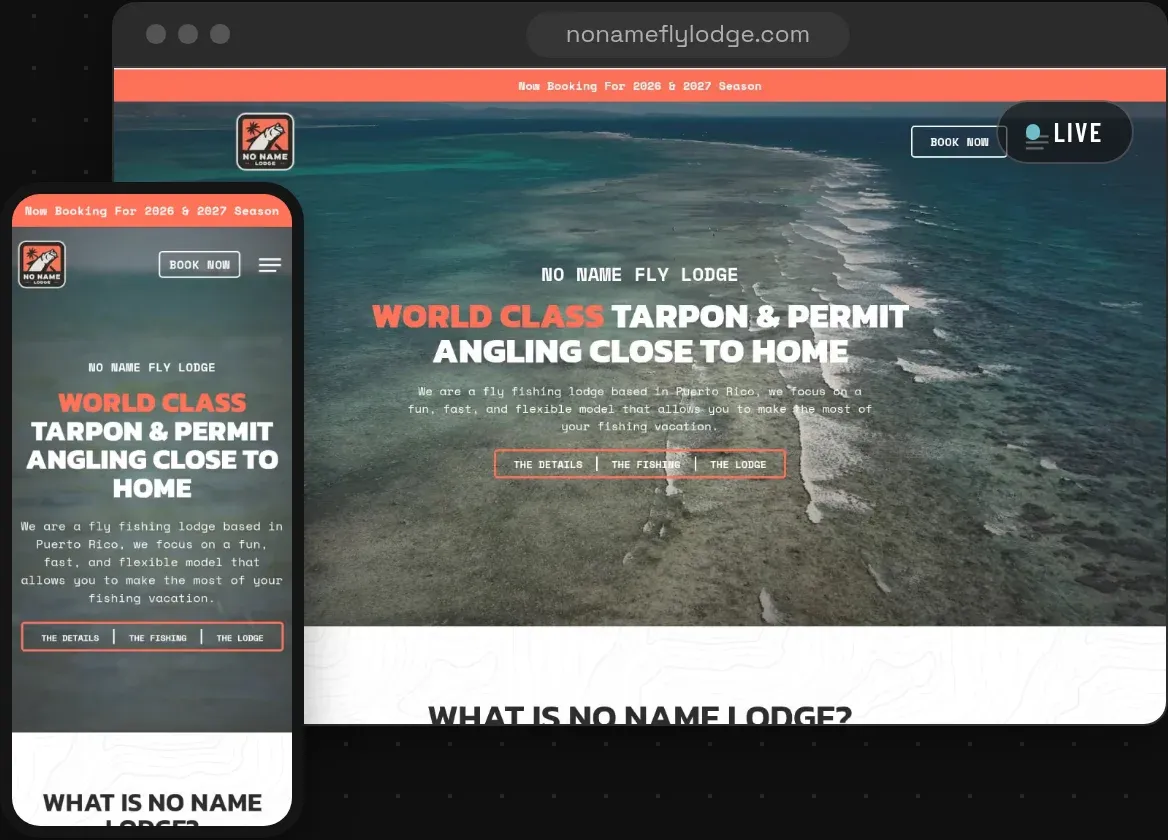
The homepage leads with the fishery. The headline puts world class tarpon and permit right up front, and the inquiry button is visible above the fold on a phone. If you landed there from a buddy’s text, you know in a few seconds whether this is your kind of trip and how to ask about dates.
Selling the fishery before the lodge
Guests book the fishing first. So The Fishery, The Fish and The Fishing come before anything about rooms or rates. The fish pages are honest about what the fishing is. Tarpon are explosive and aggressive. Permit are technical, selective and reward patience. That honesty matters. It pulls in the anglers who want that challenge, and it sets expectations so guests show up ready.
Rates up front
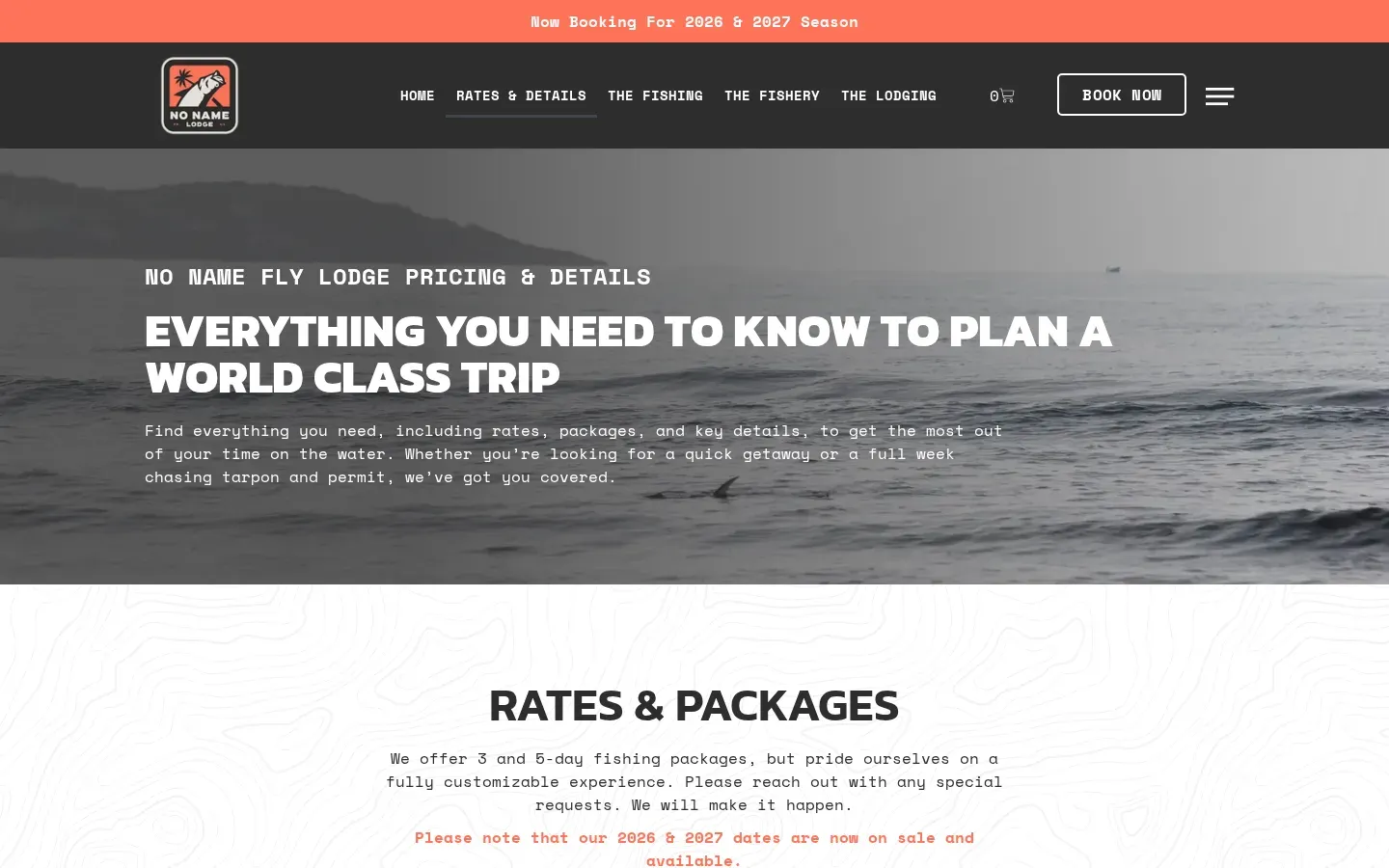
The Rates and Details page lays out packages and inclusions before the inquiry form. I push every lodge to publish rates, and this is why. An angler who can see what a week costs and what is included sends a better inquiry. They are not asking “how much?” They are asking “do you have the second week of May for four of us?”
An inquiry flow built for a phone
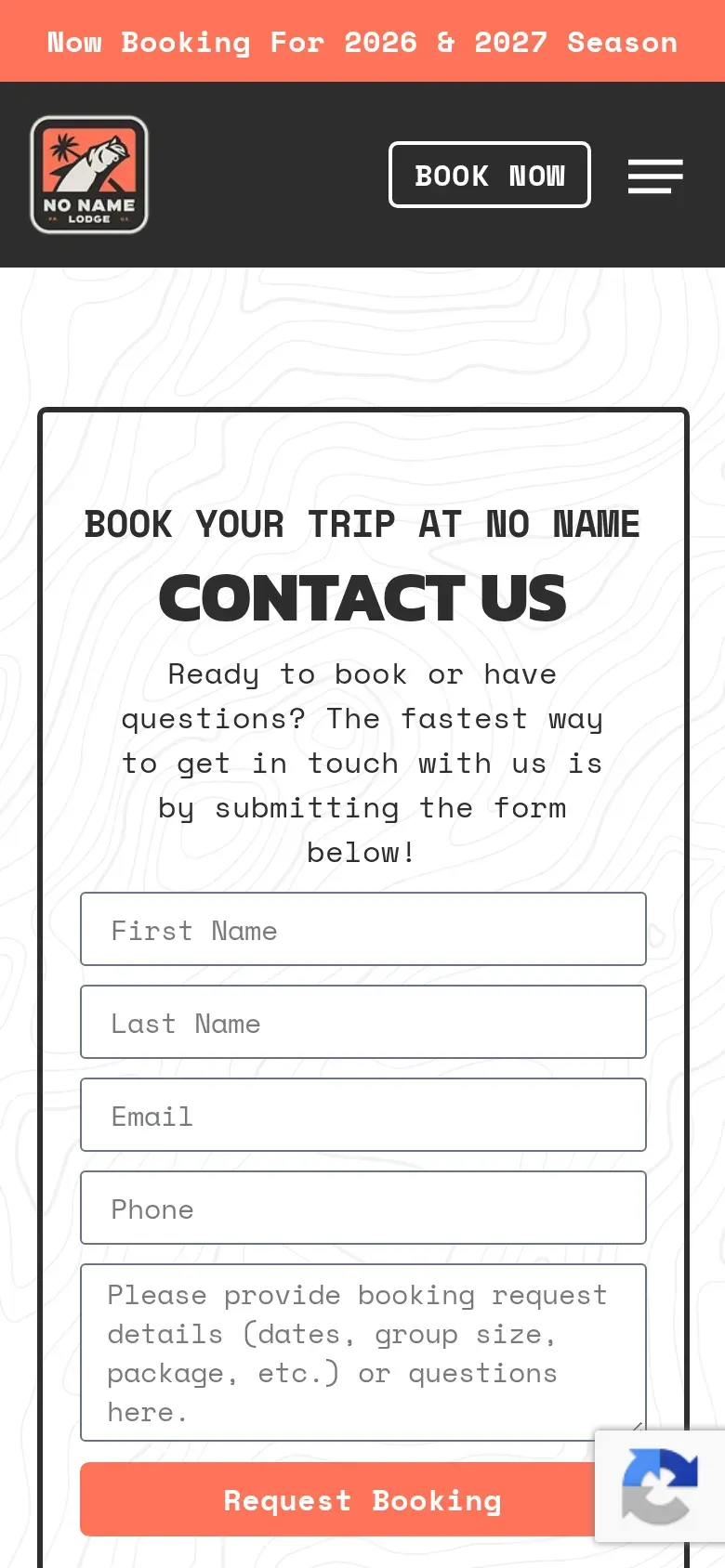
A lot of trip planning happens on a phone, usually late at night, usually in the middle of a group text. So the inquiry form puts dates and group size first. Those are the two things the lodge needs to check the calendar and reply with a real answer.
The contact page is built around that one job. No clutter, no competing links, just a clear path to ask about a trip. That page is the reason the number at the top of this post exists.
Real photos everywhere
We built the lodge’s own photography of the water, the skiffs and the fish into the pages where it helps someone decide, not just into the gallery. Anyone who fishes can spot a stock photo from across the room, and a real fish in a real guest’s hands does more selling than any headline I can write.
Build and launch
The build phase is the same on every project: build every page, test on phones and desktops, set up redirects from the old site so existing links keep working, and set up analytics so the lodge can see where requests come from. Then launch clean. None of that is exciting, but skipping any of it is how a new site quietly loses the traffic and links the old one earned.
The result
378 booking requests in the first 12 months. That is the number I care about, because it is the number the lodge cares about. Traffic and pretty pages are nice. Booking requests fill the calendar.
What other lodges can take from this
You do not need to copy the No Name site. You need to copy the thinking:
- Tell the story of the water before the lodge.
- Give each big question its own page.
- Publish your rates.
- Build the inquiry form for a phone, with dates and group size first.
- Use your real photos.
If you want to see the full project, it is on our project page. If you want to see how a build like this runs week by week, check out our process. And if you run a fishing lodge and want to talk about yours, our fishing lodge websites page is the place to start.