
Most web designers won’t put a price on their website. They want to get you on a call first. I get why, but if you’re budgeting for next season, you need a number before you need a call. So here it is.
The short answer
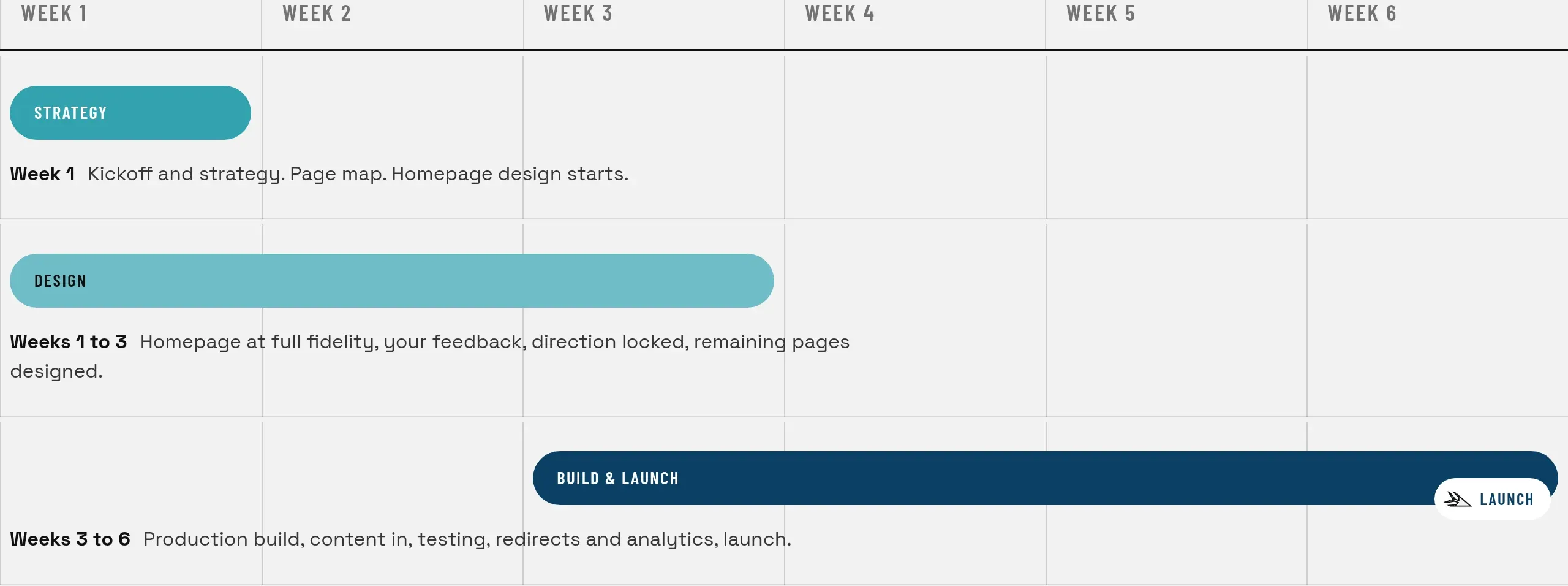
Starting at $4,000 for up to 12 pages. Larger builds are $6,000 for up to 18 pages and $8,000+ for up to 25, and additional pages are $250 each. The price is flat and published, so you’ll know the number before we start, and most builds take about 4 to 6 weeks from kickoff to launch.
For a lot of tour companies, 12 pages is plenty: a homepage, a page for each of your main tours, an about page with your guides, an FAQ and safety page, and contact. Where it goes from there depends on a few things.
What drives the price
-
How many tours and pages you need. Every tour gets its own page, because that is where guests decide and where search traffic lands. Three half-day float trips is a small site. Fourteen trips across two rivers, plus private charters, multi-day expeditions and two shop locations, is a bigger one. Page count is the biggest single driver.
-
How booking works. If you run scheduled departures on FareHarbor, Peek, Origin, AnyCreek or a similar tool, we connect it and put booking on every tour page. That is straightforward. If you sell custom trips, like a private safari or a week-long expedition, you probably need a request path that collects dates, group size and details before you quote. That takes more planning.
-
How much content we create with you. If you show up with great photos, written tour descriptions and your safety policy ready to go, the build moves fast. If we’re writing every tour page together from your notes and a phone call, that is more work, and it shows up in the price. Either way is fine. You don’t need to have it all figured out.
-
Moving off your old site. If your current site ranks for things that matter, we set up redirects so you don’t lose that traffic. A site with a lot of old pages takes more care to move.
What I’d skip
Don’t pay anyone to build a custom booking engine. FareHarbor, Peek, Origin, AnyCreek and the rest already handle calendars, payments, waivers and capacity, and they work. Your money is better spent on tour pages that sell the trip and a booking path that’s fast on a phone. Check each tool’s current pricing and fees on its own site before you choose.
The inquiry follow-up add-on
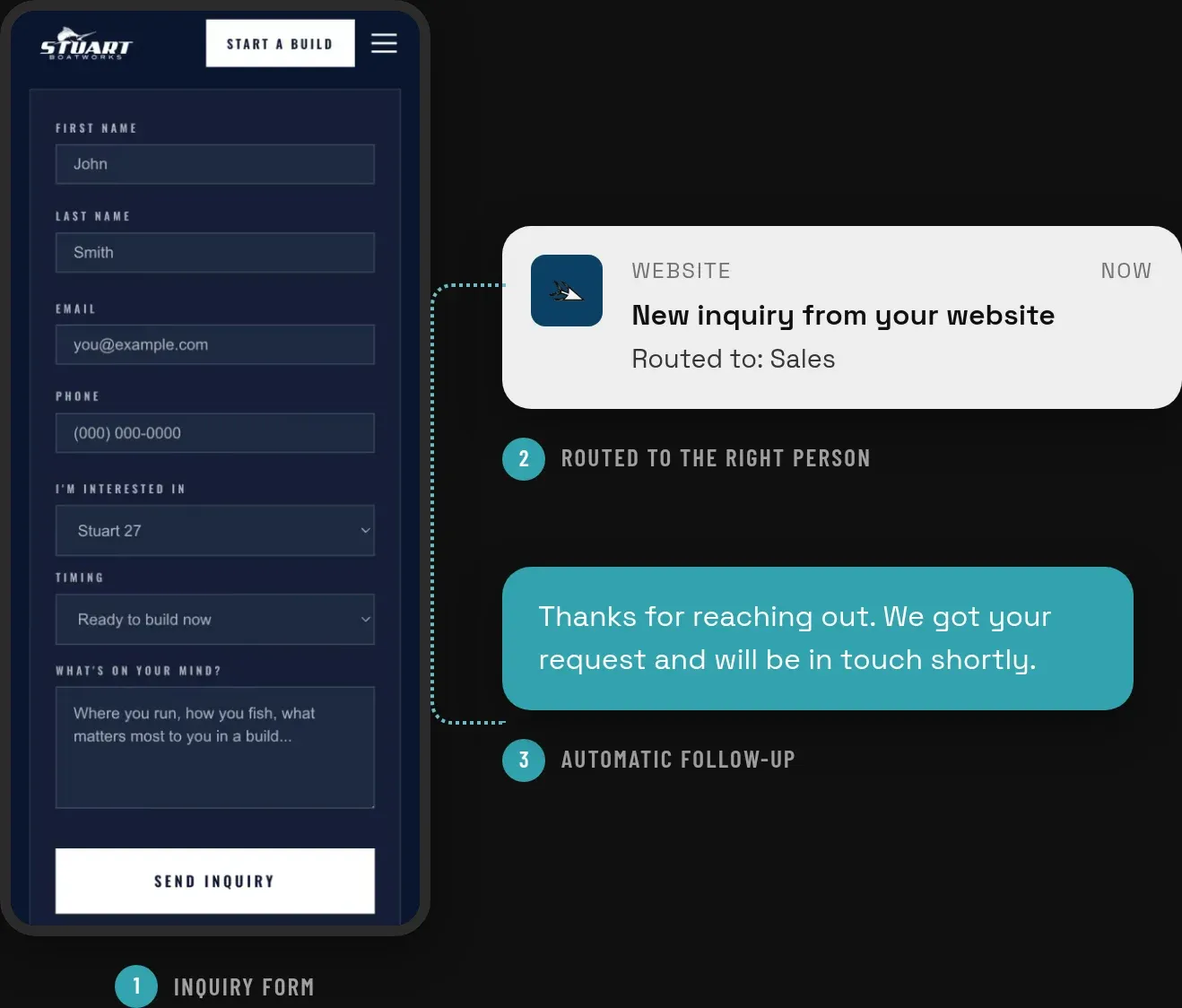
Some tour bookings don’t happen in one click. Corporate groups, weddings, school trips, private charters and multi-day trips usually start as an inquiry. Those are often your biggest bookings, and they are the easiest to lose when someone forgets to reply during a busy week.
The inquiry follow-up add-on handles that. We set up a CRM, route each form to the right person on your team, and build follow-up sequences around how you sell, so every inquiry gets captured and followed up automatically. It’s $1,500 and available on any build.
If everything you sell books instantly through your booking tool, you may not need it. If a real share of your revenue starts with “can you do a private trip for 20 people in June,” you probably do.
The Care Plan
Every site we build runs on a Care Plan. It covers hosting, platform updates, performance monitoring, minor fixes and a direct line to the people who built your site. I oversee every Care Plan and make the updates myself, so the person changing your site is the person who built it. We also check in 30 days after launch to make sure everything is running clean.
There are two levels. One keeps everything running and includes a little design and dev time each month. The other adds more monthly hours for new sections, seasonal updates and ongoing improvements. The Care Plan is required, because it is how we stand behind the work after launch. For a tour company, that matters most in peak season, when a broken booking button costs you real money every hour.
How to compare the quotes you have
When you line up quotes, make sure you’re comparing the same things:
- Does every tour get its own page?
- Is your booking tool connected on the page, or just linked?
- Who writes the tour pages?
- Are redirects from your old site included?
- What does hosting and ongoing support cost each month, and who actually does the work?
- Who do you call in July when something breaks?
A cheap build with no support and a generic template can cost more by August than a solid build would have up front.
What I can show you
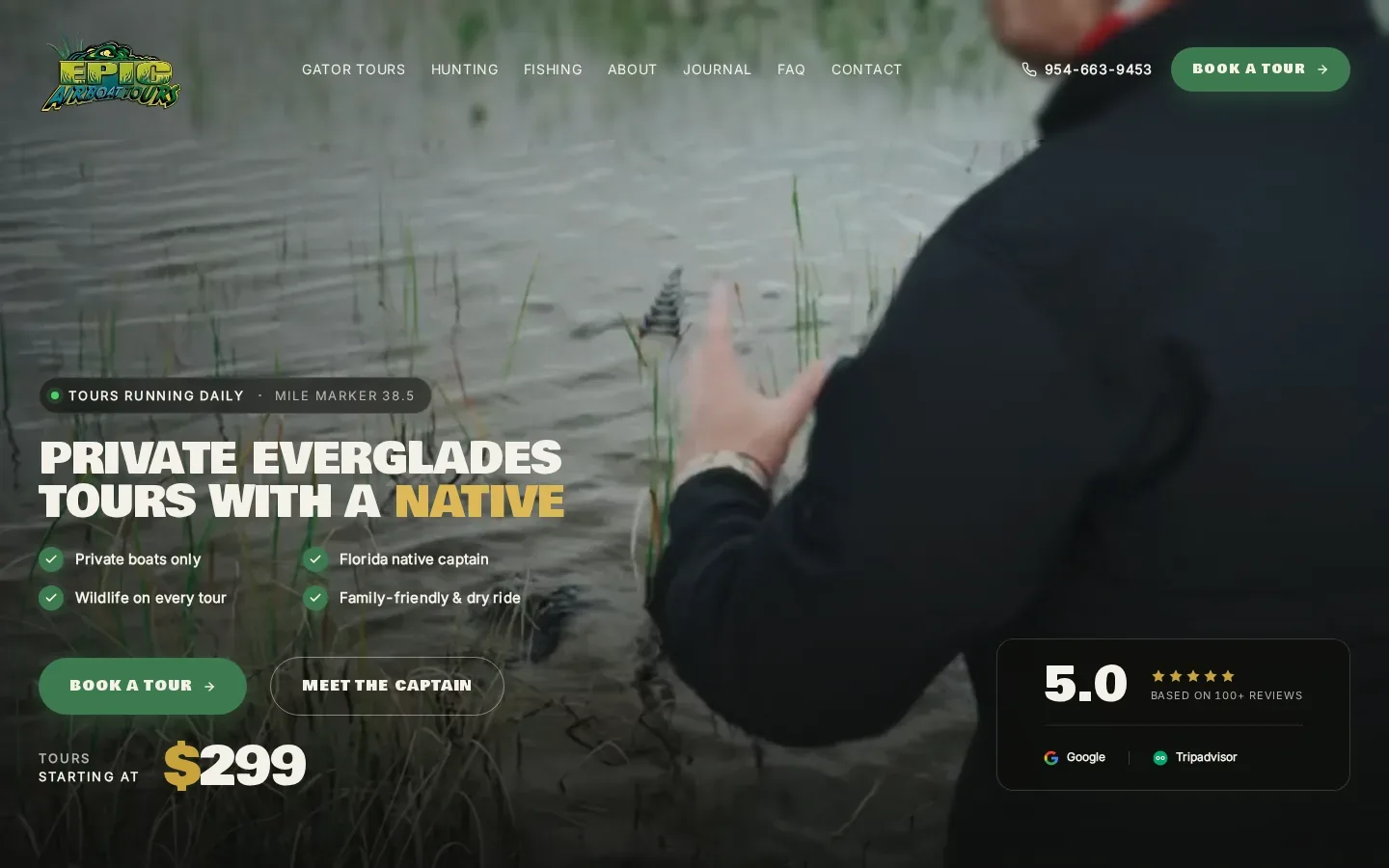
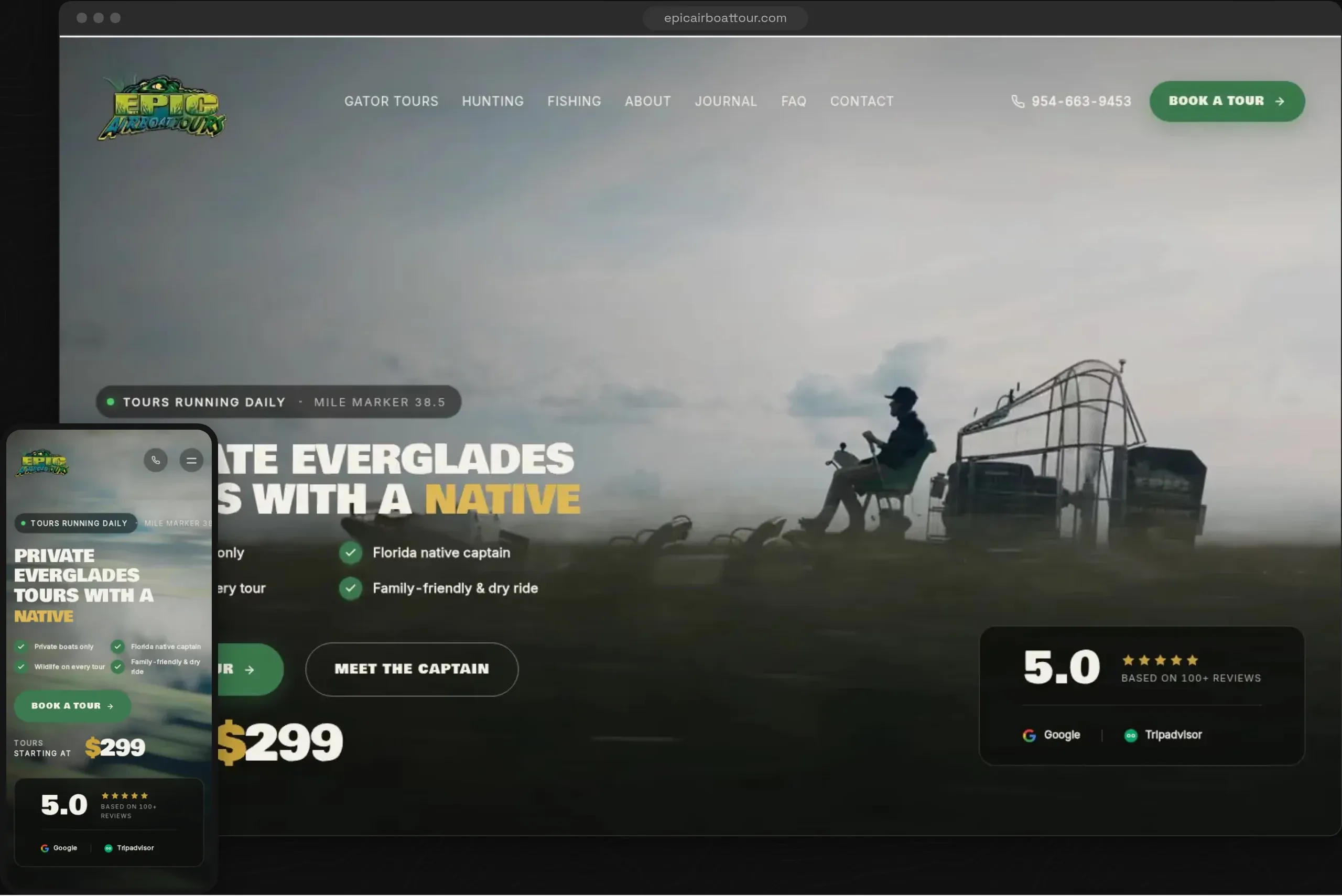
I haven’t built for a rafting, Jeep, zipline or safari company yet, and I’m not going to pretend I have. My closest tour build is Epic Airboat Tours, a private Everglades airboat tour site that picked up 244 Google clicks and 18.5K impressions in its first month. Beyond that, the closest proof is booking-driven work next door to tours: No Name Fly Lodge, a destination fly fishing trip, brought in 378 booking requests in its first 12 months, and Soul Fly Events Co. helped drive ticket sales for two big events. They’re not tour companies, but the job was the same. See them on our work page.
Plan backward from your season
Most builds take 4 to 6 weeks, but the biggest variable is how fast photos, tour details and decisions come back from your side. If you want the site live before opening day, tell me the date and we’ll plan backward from it. The off season is the best time to do this.
You can see how a build works step by step, or read how we approach adventure and outdoor experiences. Tell me what you run and how you take bookings now, and I’ll give you a straight number.