
If you run tours, you know the OTA math better than I do. Viator and TripAdvisor put you in front of people you would never reach on your own, and they take a cut of every booking for it. Sometimes that trade is worth it.
What hurts is the guest who already knew your name. They drove past your shop, got your card at the hotel, or searched your company by name. They land on your site, can’t find a price or a date, and go book you on Viator instead. That booking should have been yours, at full margin, with their email in your system.
You won’t win every OTA booking back, and you don’t need to. You need your own site to be the easiest place to book you. Here is what that takes.
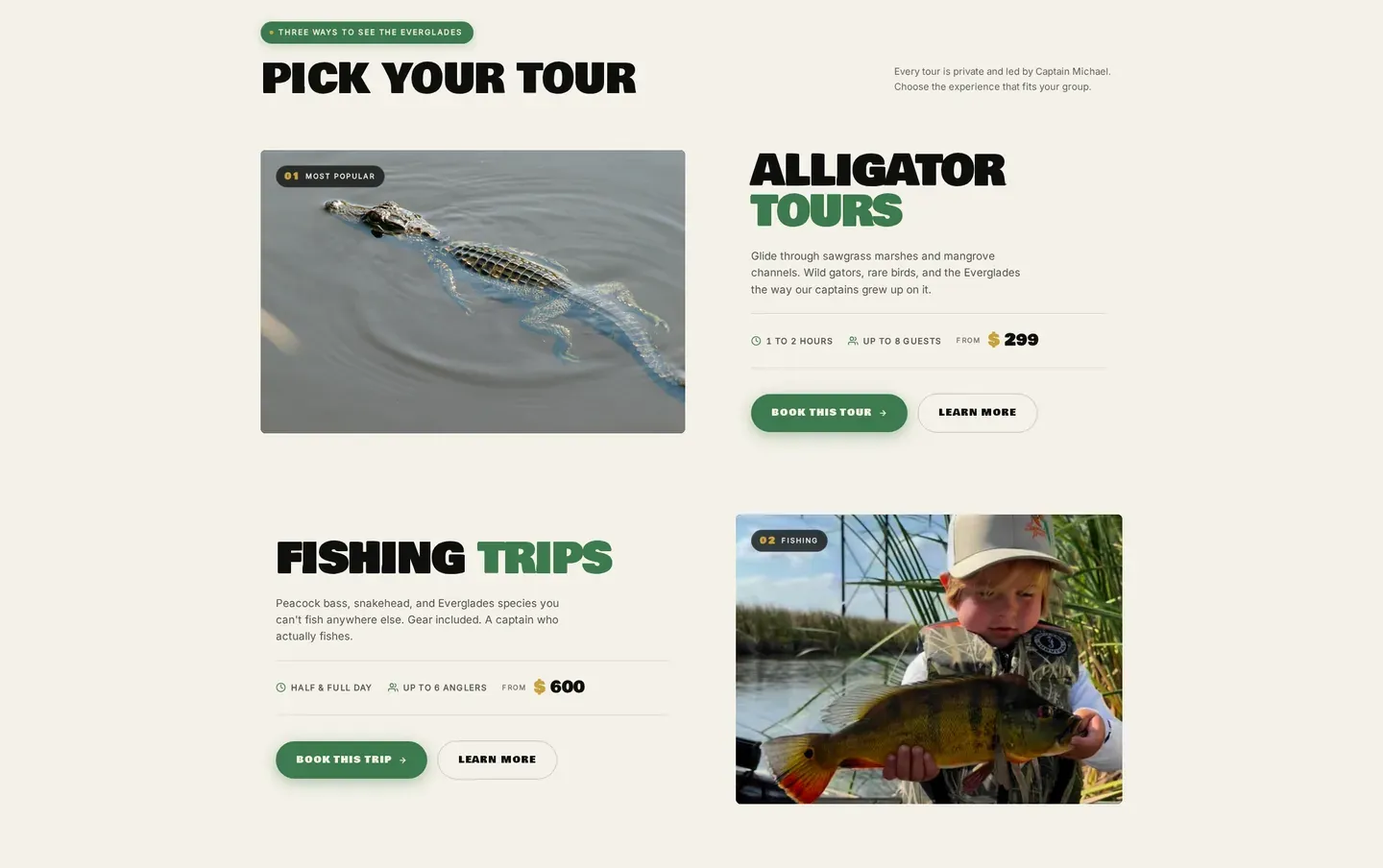
Show availability and prices up front
Guests come to your site with two questions: can I go on the day I want, and what does it cost? An OTA listing answers both on the first screen. If your site makes people click through three pages and then hit a “contact us for rates” form, you have already lost to the listing that just shows the number.
Every tour should have its own page with:
- Price, or a “from” price with the range if it changes by season or group size
- Duration and group size
- Age, weight or fitness requirements
- Meeting point and what’s included
- What to bring
- Live availability, or a clear button that opens it
People can handle a price range. What they won’t put up with is no number at all.
Make booking fast on a phone
Most of your guests book on a phone, often the night before or the same morning, from a hotel room or a parking lot in town. I design for that first and the desktop second.
In practice, that means:
- A book button on every tour page that stays visible on mobile
- A booking flow that opens right there on the page, not on a different-looking site that makes people wonder if they got redirected somewhere sketchy
- As few fields as possible before payment: date, party size, name, email, phone. Waivers and details can come after.
- Express checkout like Apple Pay or Google Pay, if your booking tool supports it
- Pages that load fast on one bar of signal, which means compressed photos and video that doesn’t force a huge download
Try this: pick up your phone, open your site and book a trip for four next Saturday. Time it. Then do the same on your Viator listing. If your own site is slower, that is the gap you are paying commission to cover.
Work with the booking tool you already use
Most operators already run on FareHarbor, Peek, Xola, Bókun, Origin, AnyCreek or something like them. Origin is booking and operations software built specifically for outdoor guides and outfitters, and AnyCreek pairs booking tools for guides with a marketplace where people find and book guided fishing and outdoor trips. Your website shouldn’t replace any of that. It should sit on top of it and make it easy to use.
That means:
- Embedding the booking calendar or checkout on each tour page
- Linking each tour page to the matching item in your booking system, so guests don’t have to pick the tour twice
- Tracking completed bookings in your analytics, so you can see which pages and which searches turn into revenue
I don’t care which tool you use. We connect the one you already have. If you take bookings by phone and email, or you run custom trips like multi-day expeditions, we build a request path that sends you everything you need to confirm the trip. If you’re thinking about switching tools, check each vendor’s current pricing and fees on their own site before you decide. Those change, so I won’t quote them here.
Build trust with real photos and reviews
An OTA listing borrows trust from the OTA’s brand. Your site has to earn it on its own, and fast.
- Reviews up front. On the homepage and on each tour page, not buried on a separate testimonials page.
- Real photos and video. Your guides, your boats, your trucks, your river, your guests having the day. Stock photos of a generic rapid make you look like a reseller.
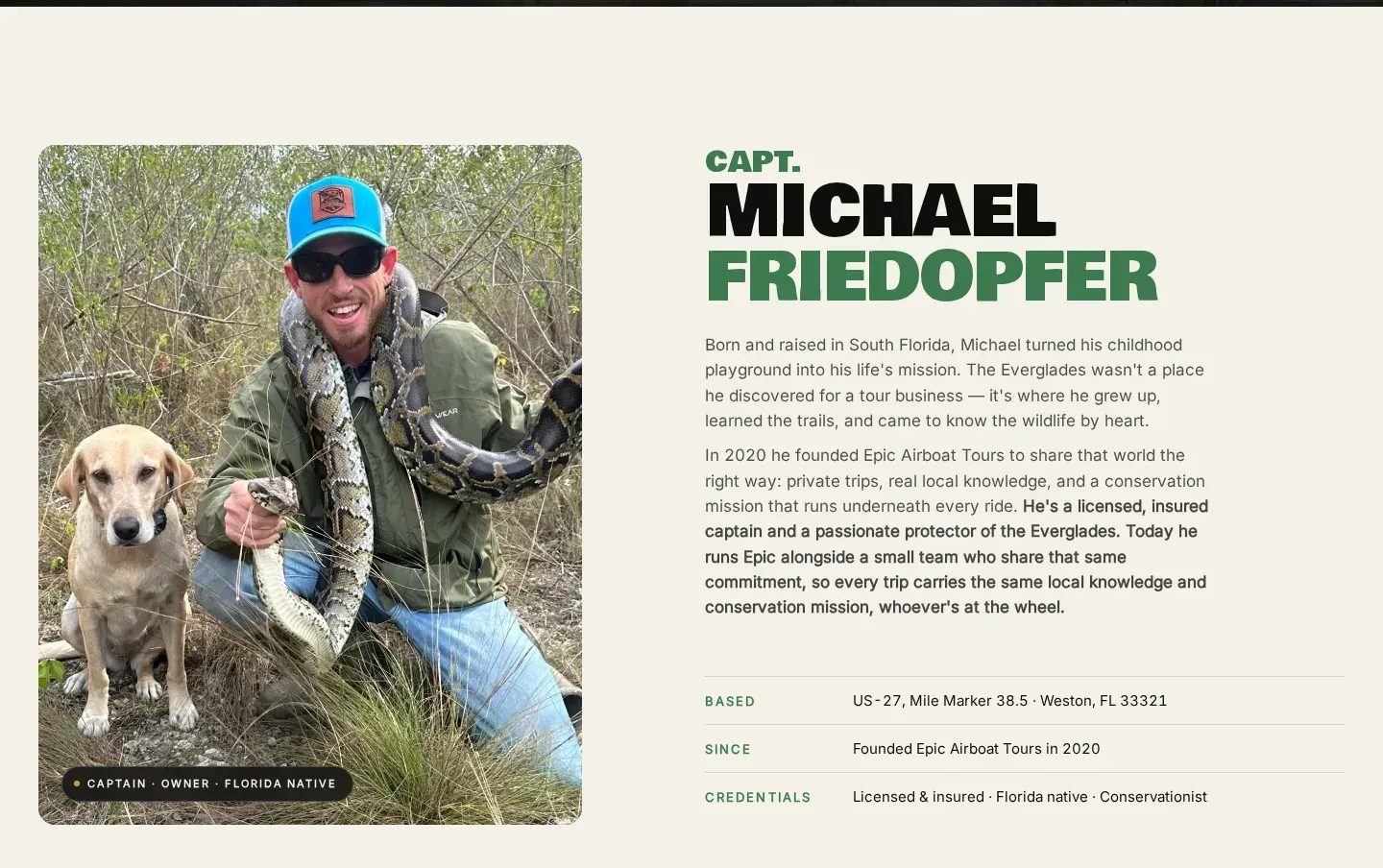
- The people. Name your guides and captains. Show their faces. Say how long they’ve been doing it.
- Safety, said plainly. For whitewater, ziplines, backcountry routes or anything with real risk, say how you handle safety, what experience guests need, what happens with weather and what your cancellation policy is.
A guest who gets those answers on your site has no reason to go hunting for them on an OTA.
Make each tour easy to find
Direct bookings start with people finding you directly. Each tour page should be built to show up when someone searches the activity and your town. That is one more reason every tour needs its own page with real detail. One “Tours” page with six cards on it can’t rank for six different trips.
The proof I can show you
I’ll be straight with you. I haven’t built a site for a rafting, Jeep, zipline or safari company yet.
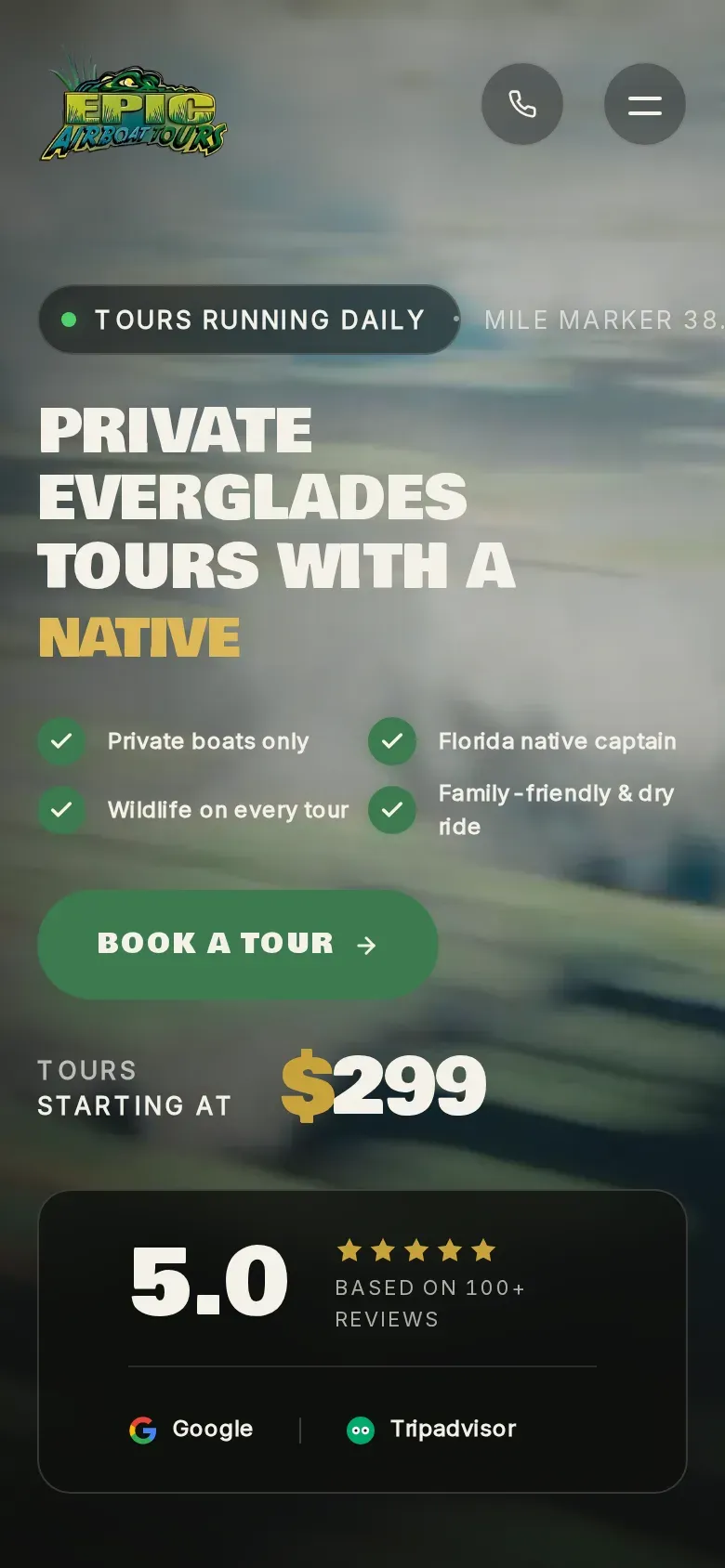
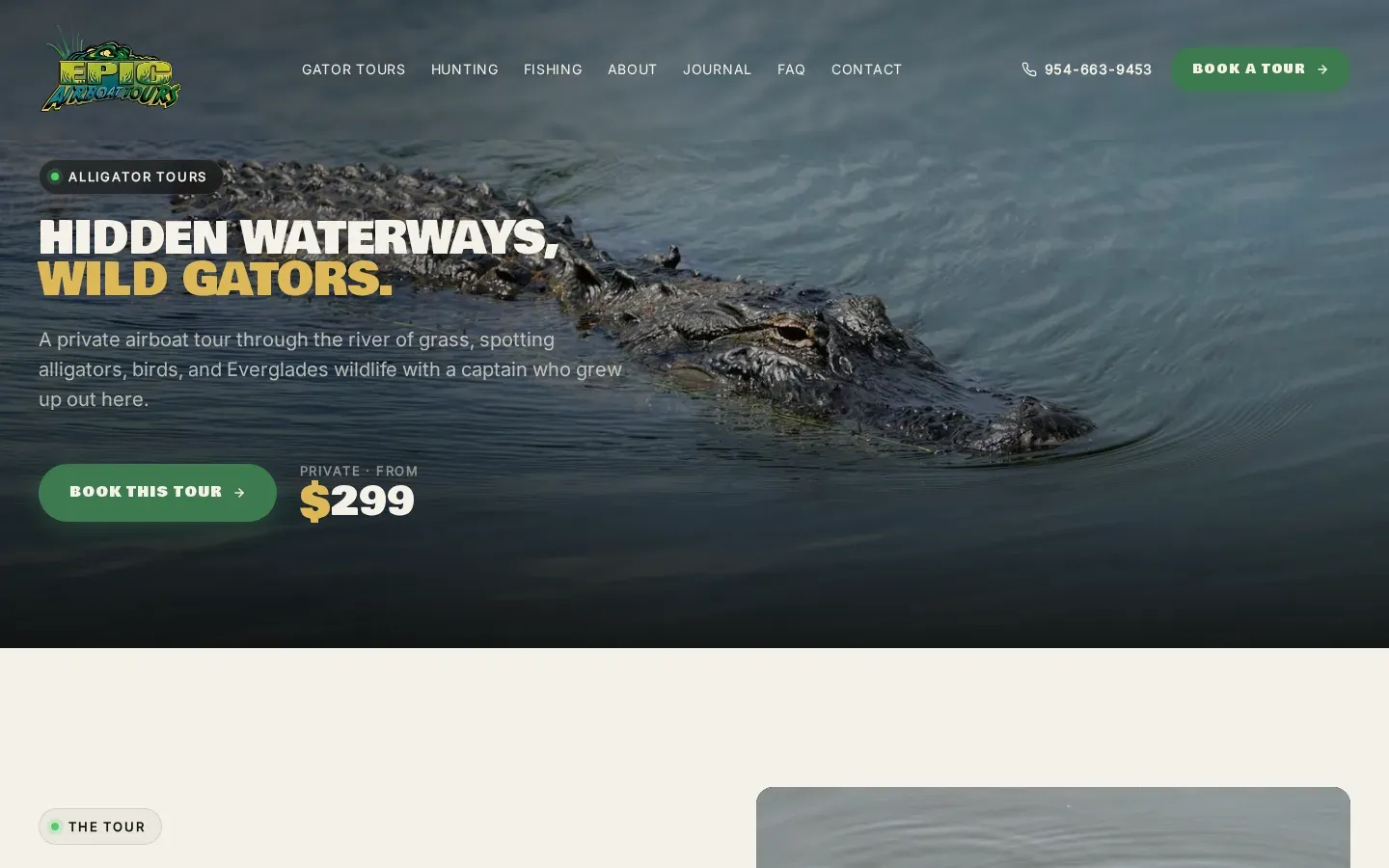
The closest tour build I have is Epic Airboat Tours, a private Everglades airboat tour company. Three clear tours, real reviews up front and a short path to a booked ride. It picked up 244 Google clicks and 18.5K impressions in its first month.
The rest of my proof is booking-driven work next door to tours. No Name Fly Lodge, a destination fly fishing trip in Puerto Rico, brought in 378 booking requests in its first 12 months. Soul Fly Events Co. is an events site that helped drive ticket sales for two big events. Different businesses, same job: get someone from interested to booked with as little friction as possible. You can see all of it on our work page.
Questions to ask whoever builds your site
If you’re shopping right now, ask every designer you talk to:
- Will every tour have its own page with price and availability?
- How does booking work on a phone, and can I see an example?
- How does the site connect to my booking tool?
- Where do reviews and real photos show up?
- Can my team update tours, dates and photos without calling you?
If the answers are fuzzy, keep shopping.
You can see how we approach tour sites on our adventure and outdoor experiences page, and how a build works from kickoff to launch. Tell me what you run and how you take bookings today, and I’ll tell you what it will take. If a full rebuild isn’t the right call, I’ll say so.