

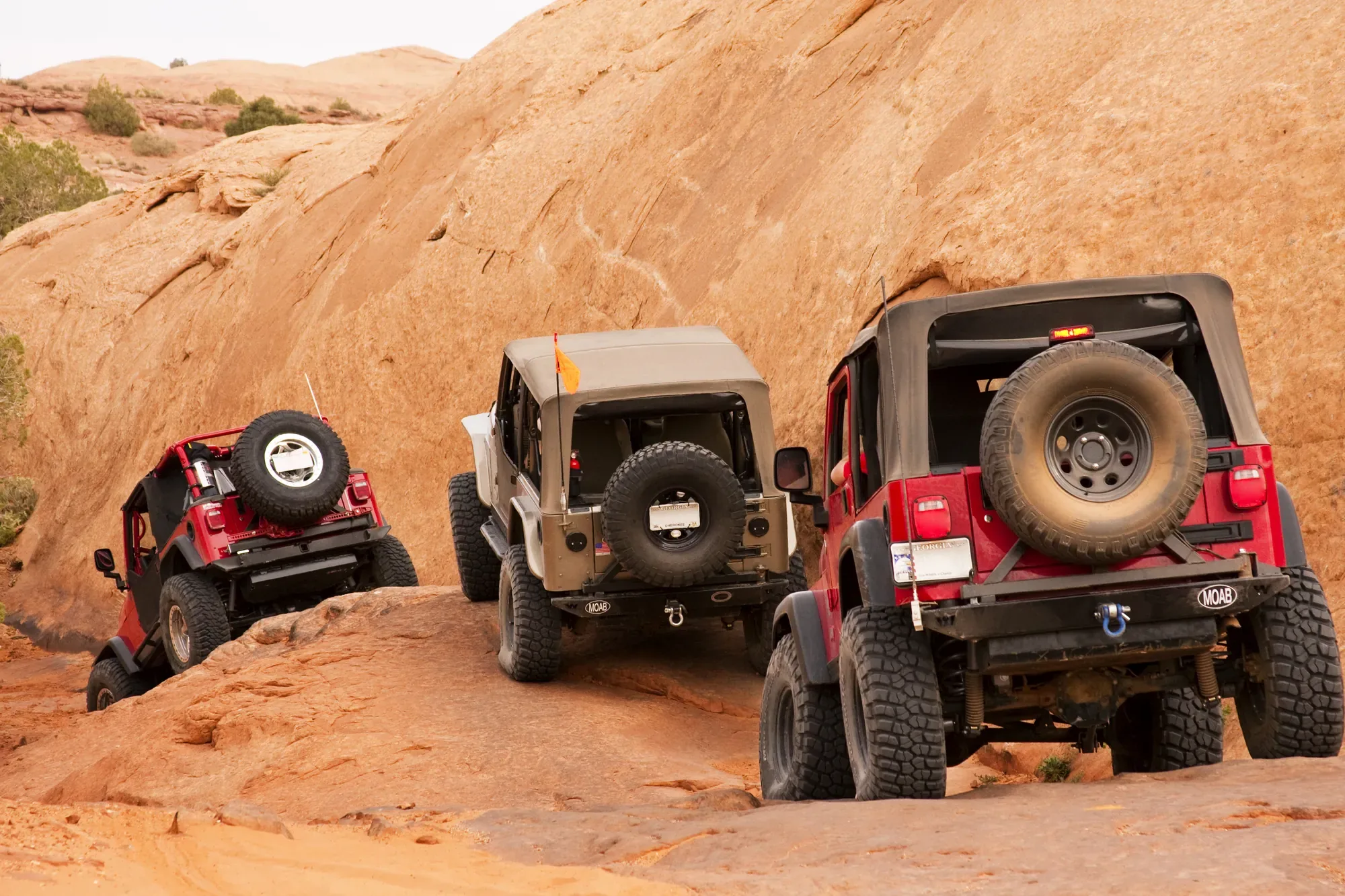
A Jeep tour seat is the most perishable thing you sell. If the 2 PM departure leaves with two empty seats, that money is gone. Nobody books Tuesday’s empty seat on Wednesday.
So when I look at an off-road tour website, I ask one question: does it help fill every seat on every departure, or does it just look good on the owner’s laptop? Most fail the same way. A nice hero photo, a Tours page that lists everything in one long scroll, and a Book Now button that dumps people into a calendar with no context.
Here’s what I’d build for a Jeep or off-road tour company that wants to sell out the season.
Sell the ride before you sell the seat
Guests aren’t buying a seat in a Jeep. They’re buying the view at the top, the creek crossing, the moment the kids put their phones down. Your homepage has one job in the first five seconds: show that.
That means real video shot from the vehicle, on your trails, with your guides. Not stock footage of a Jeep in a desert you don’t drive. On the Epic Airboat Tours build, the homepage opens on a full-screen video shot off the airboat, because the ride is the product. Same logic applies to a Jeep on a ridgeline. Keep it compressed so it plays fast on a phone over hotel Wi-Fi.
One page per trail, with an honest ride rating
This is where off-road is different from almost every other tour. Guests have wildly different ideas of what “off-road” means. One family wants a smooth scenic drive with photo stops. The next group wants rock crawling and a story to tell at dinner. If your site doesn’t say which tour is which, you get the wrong people on the wrong trip, refund requests and reviews that say “rougher than expected.”
Every tour gets its own page, and every page answers:
- What the ride feels like. Use a simple scale like mild, moderate and rough, and describe it in plain words.
- Who it suits. Minimum age, car seat rules, and a straight answer for guests with back, neck or pregnancy concerns.
- How long, how far and where it goes. The scenic stops, the highlight, the turnaround point.
- Price and what’s included. Water, park fees, photos, pickup.
- Where to meet, or which hotels you pick up from.
The honest rating does two jobs. It filters out guests who would have been unhappy, and it makes the rough trail more appealing to the people who want it. “Our roughest trail. Skip it if you have back problems.” sells rock crawling better than any adjective.
Private vs shared: make the math obvious
Most Jeep outfits sell two ways: a seat on a shared tour, or the whole vehicle. A family of five often doesn’t realize that booking the whole Jeep may cost close to what five seats cost, and they get the guide to themselves.
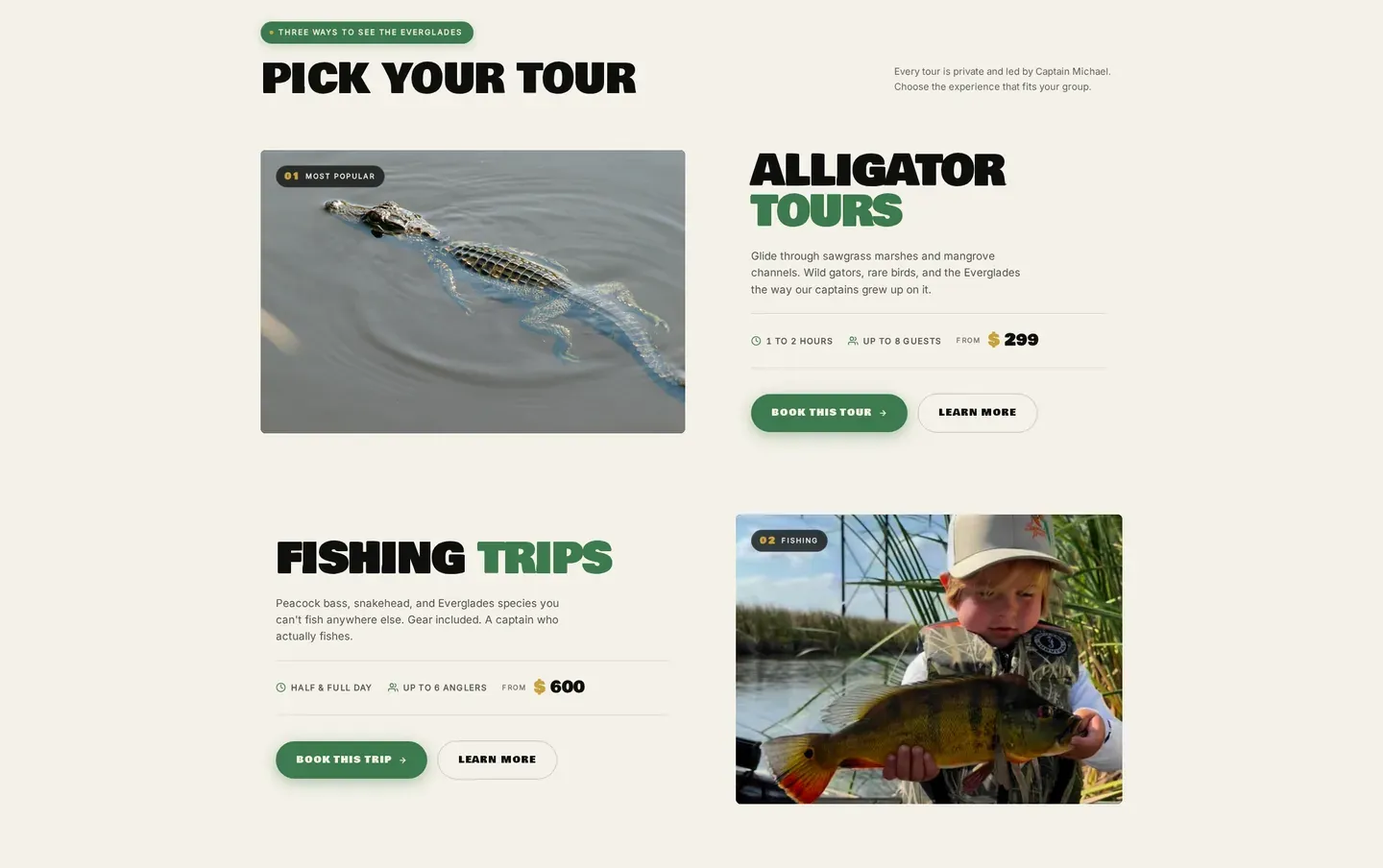
Put that comparison on the page. A short line like “Groups of 5 or 6: book the whole Jeep” next to the per-seat price turns a group that would bounce off a nearly full shared run into a private booking. On Epic Airboat Tours every trip is private, so the tour cards lead with group size and starting price. Same move.
Show availability, not just a calendar
A Book Now button that opens a blank calendar is a slot machine. The guest clicks dates until something works or gives up.
Whatever booking tool you run, the tour page should show a starting price, how many people the vehicle holds and what’s open soon, then open booking right there on a phone without kicking guests to a site that looks nothing like yours. I connect the booking tool you already use. You shouldn’t have to switch platforms to get a better website. I wrote more about this in how tour operators get more direct bookings.
Sold-out dates help you too. If Saturday is gone, say so and point to Sunday morning or the sunset run. Scarcity is real in this business. Use it honestly.
Fill the slow days on purpose
Selling out the season is rarely about peak weekends. Those fill themselves. It’s about weekday mornings, shoulder months and the departure nobody picks.
Your site can steer that:
- A sunset or early tour with its own page, its own photos and its own reason to book.
- Group and private event pages for corporate outings, reunions and wedding parties, with a short request form that asks for the date, group size and trip they want.
- Gift cards on the site before the holidays, if your booking tool sells them. Somebody is shopping for their dad’s Christmas gift right now.
Answer the questions before they call
The phone calls you get every day are a list of website problems. Can my 6-year-old come? What if it rains? Is there a bathroom stop? Will we get muddy? Can you pick us up at our hotel?
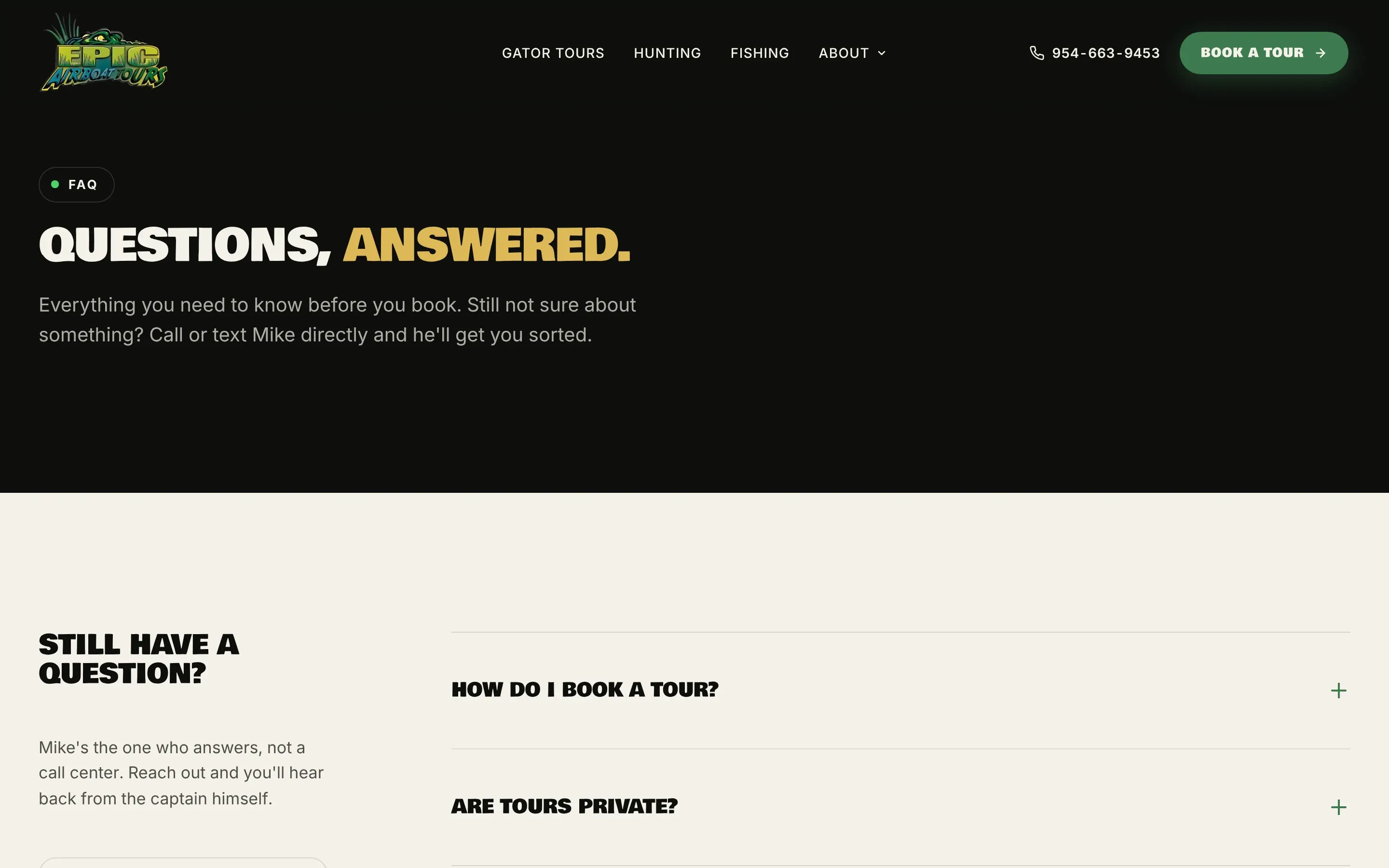
Put those answers on the tour pages and in a real FAQ, especially weather and cancellations. Off-road trips get rained out and trails close, and a guest who knows exactly what happens in that case books with less hesitation. Those same plain answers are what Google and AI assistants read when someone asks for the best Jeep tour near town. Epic Airboat Tours was built with a page per trip and real FAQs, and the site earned 244 Google clicks and 18.5K impressions in its first month.
Reviews next to the button, not on a separate page
Off-road tours are bought on trust. Is this guide safe? Is it worth the money for a family of five?
Put your rating and a few real reviews next to the booking buttons on every tour page. Name your guides and show their faces. Say plainly how you handle safety: vehicle maintenance, guide experience, what happens if someone gets nervous on a steep section. A separate Reviews page nobody clicks is wasted proof.
Rebuild in the off-season, not in April
If you’re thinking about a new site, the window is now. Most of my builds take about 4 to 6 weeks from kickoff to launch, and the biggest variable is how fast photos, tour details and decisions come back. Start in winter and you launch before spring break traffic. Start in April and you’re launching into your busiest month while also answering the phone.
Custom builds start at $4,000, priced upfront, with a Care Plan behind every site so it keeps up after launch.
What I’ll be straight about
I haven’t built for a Jeep or off-road tour company yet. The closest build in my portfolio is Epic Airboat Tours, a private Everglades airboat outfit, and the problems are the same: sell the ride, explain each trip honestly, put trust next to the button and make booking fast on a phone. You can see it with the rest of the builds on our work page, and how I approach tour sites on the adventure and outdoor experiences page.
When you hire Flood Tide, you work with me directly. I’m the one who learns your trails, designs the site and builds it. No sales team, no handoff to a junior designer. Here’s how a build works, step by step. If you want a site that fills the slow Tuesday and not just the busy Saturday, tell me about your tours.